


How Kenya Could One Day Be Surrounded by Ocean
Kenya lies along one of the most powerful geological features on Earth known as the East African Rift System. This enormous crack in the Earth’s crust stretches thousands of kilometres, from the Red Sea in the north all the way to Mozambique in the south.
Scientists believe that this rift is slowly tearing the African continent apart. Although the process is extremely slow, taking millions of years, it could one day cause the eastern part of Kenya to break away and become surrounded by ocean water.
Within Kenya, the most important section of this system is the Gregory Rift, which runs from north to south through the country. This rift marks the boundary between two massive tectonic plates: the Nubian Plate to the west and the Somali Plate to the east.
These plates are slowly drifting away from each other at a rate of about 6 to 7 millimetres per year. While this movement may seem small, over millions of years it adds up to major changes.
The force driving this separation comes from deep beneath the Earth. Scientists point to a powerful upwelling of hot, molten rock known as a superplume rising from the mantle.
This heat weakens and thins the Earth’s crust, making it easier for the land to stretch, crack, and slowly pull apart.
As the crust thins, volcanic activity increases and the ground becomes more unstable, setting the stage for eventual separation.
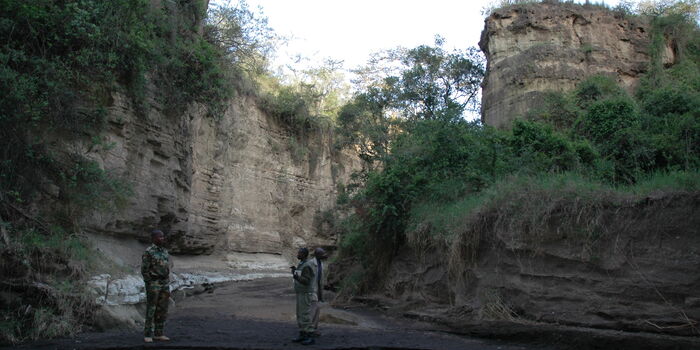
Kenya’s Great Rift Valley provides clear and visible evidence of this ongoing process. The dramatic escarpments, wide valleys, and deep basins seen across the country are signs of the Earth’s crust being stretched.
Alkaline lakes such as Lake Turkana, Lake Baringo, Lake Nakuru, and Lake Naivasha sit within these depressions, formed as the land sank between separating plates. These lakes are not only scenic but also powerful indicators of tectonic activity below the surface.
Volcanic mountains further highlight the region’s geological instability. Peaks such as Mount Kenya, Mount Suswa, and other volcanic cones formed as magma pushed upward through weak points in the crust.
These volcanoes show where underground pressure has found a way to escape, shaping the land over time.
Another major sign of rift activity is Kenya’s intense geothermal energy. Beneath the surface, heat from magma warms underground water, producing hot springs, steam vents, and geysers.
Lake Bogoria is one of the best examples, hosting more than 200 hot springs, the highest concentration anywhere in Africa. In some areas, water temperatures reach up to 98.5°C, bubbling due to trapped gases like carbon dioxide.
Similar geothermal features can be found at Lake Magadi, Lake Turkana, and Kilibwoni in Nandi County. This underground heat is not just a scientific curiosity—it is also an important resource.
Kenya uses geothermal energy to generate a large share of its electricity, making the country a global leader in renewable energy from the Rift Valley.
The bubbling lakes, steaming vents, and hot springs exist because magma chambers lie close to the Earth’s surface along the rift. Heated water rises through cracks in the crust and escapes above ground. These surface features are clear signals that the land beneath Kenya is slowly being pulled apart.
In recent years, scientists have recorded unusual geothermal events that further support this idea. For example, bubbling water emerging from sinkholes near Lake Baringo has been linked to changes in underground pressure.
Such events suggest that the rift is still active and evolving, even if the changes are happening gradually and quietly.
Looking far into the future, scientists believe that as the Somali Plate continues drifting eastward, a large section of eastern Africa could eventually detach from the rest of the continent.
This separated block could include parts of Kenya, the Somali coastline, and northern Tanzania. Over time, the low-lying rift valley may sink further and allow seawater to flow in, forming a new ocean basin.
The most advanced part of this process is already visible at the Afar Triple Junction in Ethiopia, where the Nubian, Somali, and Arabian plates are pulling apart.
This area shows what Kenya’s future might look like. Once the new ocean fully connects to the Red Sea and the Gulf of Aden, the eastern landmass would be completely cut off, effectively turning Kenya into part of a new island continent in the Indian Ocean.
This transformation will not happen suddenly. Scientists estimate it will take five to ten million years to fully unfold.
Events such as the widely reported 2018 ground fissure near Suswa may appear dramatic, but they are local surface cracks rather than signs of an immediate continental split. The real changes happen deep underground and at a very slow pace.
If and when the separation is complete, the geography of East Africa will be permanently changed. New coastlines will form, and currently landlocked countries such as Uganda and Zambia could gain access to the sea.
Major Kenyan towns and cities near the Rift Valley might one day lie close to ocean shores. While this future is far beyond human timescales, the forces shaping it are already active beneath Kenya today.
Join Kenya Youths Forum Official WhatsApp Channel
https://whatsapp.com/channel/0029VaWT5gSGufImU8R0DO30
