


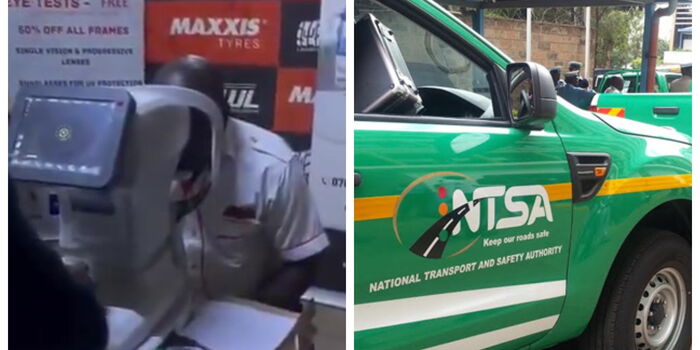
NTSA Plans Mandatory Eye Tests for All Drivers to Improve Road Safety
The National Transport and Safety Authority (NTSA) is preparing to introduce mandatory eyesight tests for all drivers, with a strong focus on public service vehicle (PSV) and commercial drivers.
This move is part of a wider effort to reduce the growing number of road accidents linked to poor visibility.
The phased nationwide programme is set to begin in Nairobi County before being rolled out to the rest of the country.
The planned eye-testing programme comes at a time of growing concern over road safety. In the first 20 days of 2026 alone, Kenya recorded more than 40 deaths from road accidents, the highest number ever reported within such a short period.
NTSA believes that poor eyesight, especially during night driving, is a major contributor to these fatal crashes.
According to the authority, the goal is to eventually screen every driver in the country free of charge. However, before the full rollout begins, NTSA has partnered with private companies to offer voluntary eye tests.
On the first day of this voluntary exercise in Nairobi County, more than 200 drivers turned up for testing, showing strong interest from motorists.
NTSA has noted that many deadly accidents happen at night, particularly on long-distance routes. Drivers often struggle with poor visibility on dark roads, which increases the risk of crashes.
Official NTSA data shows that Kenya recorded 4,458 road accident deaths in 2025, representing a 3.4 per cent increase compared to the 4,311 deaths reported in 2024.
Pedestrians were the most affected group, with 1,685 lives lost in road accidents last year. Motorcyclists followed closely with 1,148 deaths, while passengers accounted for 723 fatalities.
Rear seat passengers recorded 432 deaths, drivers lost 403 lives, and pedal cyclists reported 67 deaths across the country during the same period.
In terms of regional impact, Nairobi County recorded the highest number of fatalities at 447 deaths. Kiambu County followed with 387 deaths, while Nakuru County reported 318 road accident fatalities in 2025.
These figures highlight the urgent need for stronger safety measures, especially in highly populated and busy transport corridors.
NTSA has identified several key causes behind the rising number of road deaths. These include speeding, drunk driving, driver fatigue, and failure to follow safety regulations.
Poor eyesight and reduced night visibility have been singled out as major risk factors that worsen the impact of these dangerous driving behaviours.
The authority has previously enforced mandatory eye tests and medical assessments for drivers, with major enforcement operations carried out as recently as June 2023.
NTSA maintains that most fatal journeys occur at night, when poor visibility combines with fatigue and other human errors to create extremely dangerous conditions for road users.
Kenya last imposed a nationwide ban on night travel for long-distance public service vehicles on December 31, 2017. This followed the tragic Migaa accident, which claimed 31 lives.
Under the ban, PSV operations were limited to between 6 a.m. and 7 p.m., although the High Court temporarily lifted the restriction in January 2018.
The upcoming eye-testing programme also follows the introduction of new NTSA regulations that prevent suspended drivers from joining or operating under any registered SACCO. Drivers whose licences have been suspended are now required to return to approved driving schools for mandatory retraining before their licences can be reinstated.
NTSA says the free eye-testing initiative is part of a broader strategy to address human factors that contribute to road accidents.
By improving driver vision and reinforcing existing safety rules, the authority hopes to significantly reduce road fatalities and make Kenyan roads safer for all users.
Join Tutam Official WhatsApp Channel to stay updated on time
https://whatsapp.com/channel/0029VaWT5gSGufImU8R0DO30
