


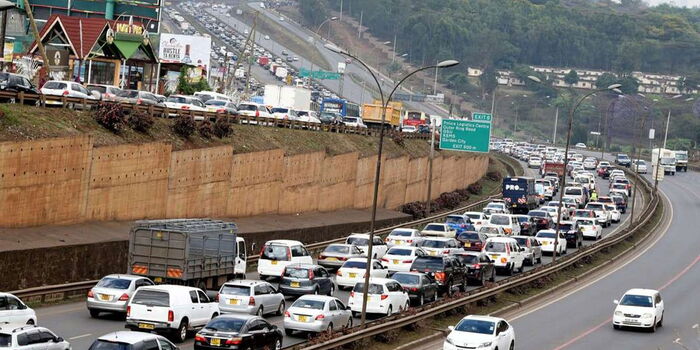
The United Kingdom, together with other G7 countries, has pledged strong support for Kenya’s ongoing efforts to tackle Nairobi’s growing traffic congestion through the ambitious Nairobi Railway City Project.
British High Commissioner Neil Wigan, during a meeting on Monday, July 21, with Prime Cabinet Secretary Musalia Mudavadi, Transport CS Davis Chirchir, and representatives from G7 member states, confirmed the UK’s active involvement in plans to upgrade and expand Nairobi’s commuter railway network.
He stated that the British government is currently waiting for Kenya to issue a formal Request for Proposals (RFP) so that interested partners can submit detailed bids.
“We’re closely working with the Kenyan government on this major rail initiative. We’ve gone through the initial stage of expressions of interest and are now eagerly awaiting the RFP. This shows how strong international partnerships can bring real and visible progress,” Wigan explained.
Transport CS Davis Chirchir highlighted the scale of the project, revealing that the government plans to overhaul and modernize 165 kilometers of Nairobi’s existing commuter rail lines.
Once completed, this upgraded network is expected to carry at least 30,000 passengers every hour by the year 2030. Chirchir emphasized that the project is a crucial part of a broader government initiative to improve mobility in Nairobi and reduce chronic traffic jams.
As part of the upgrade, the government has already approved the construction of a new 30.5 km railway line connecting Riruta to Ngong, Kiserian, and Ongata Rongai. This corridor will help link fast-growing residential areas with the city center, easing the burden on road transport.
“A total of 165 kilometers of railway track will be refurbished, while several new commuter rail lines are being planned to extend transport services across Nairobi’s expanding metropolitan region,” Chirchir said.
“The Riruta–Ngong–Kiserian–Ongata Rongai line is one of the most strategic components, aiming to serve commuters from key satellite towns.”
During the high-level meeting, G7 representatives from countries including Canada, France, Germany, Italy, Japan, the UK, and the US, reviewed the ongoing progress of various transport infrastructure projects across Nairobi.
CS Chirchir also noted that the railway project is just one part of a larger integrated urban mobility plan. The government is also rolling out other transport options such as the Bus Rapid Transit (BRT) system and pedestrian- and cyclist-friendly routes (non-motorised transport systems), all of which are in different stages of implementation.
“Our target is to evacuate at least 30,000 people every hour through the Nairobi Railway Central Station by 2030,” Chirchir noted.
“This goal will be achieved by building a reliable and coordinated transport system combining rail, BRT, and non-motorised travel options.”
Prime Cabinet Secretary Musalia Mudavadi stressed that these transport initiatives are not only designed to fix the traffic problem but also to reshape the capital into a smarter, more accessible, and economically vibrant city.
“These are more than just traffic solutions,” Mudavadi said. “They represent a new chapter in building a modern, inclusive, and livable capital city that truly serves all Kenyans and drives national growth.”
The bold railway plan, backed by Kenya’s development partners in the G7, is expected to significantly improve commuting experiences, reduce vehicle emissions, create jobs, and support the economic transformation of Nairobi and beyond.
Join Gen Z New WhatsApp Channel To Stay Updated On time https://whatsapp.com/channel/0029VaWT5gSGufImU8R0DO30
