


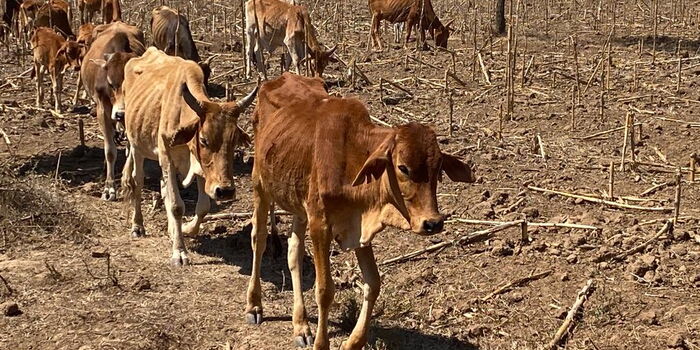
Kenya is expected to face hotter and drier weather than usual over the next three months, according to a new alert from the Kenya Meteorological Department.
The weatherman says the October–November–December short rains are coming to an end, mainly between the first and fourth week of December, and only a few regions may still receive occasional showers.
The Acting Director of Meteorological Services, Edward Muriuki, explained that the country should prepare for increasing heat from December through February. He noted that both daytime and nighttime temperatures will remain higher than the long-term average.
“Temperatures will be warmer than normal across the entire country. We expect long periods of heat that will push daytime temperatures even higher and raise nighttime temperatures too, leading to generally hotter conditions throughout the month,” Muriuki said.
Why Kenya Will Be Hotter: La Niña & a Negative IOD
Muriuki added that large-scale climate patterns such as La Niña and a negative Indian Ocean Dipole (IOD) are the main drivers behind the expected heat and dryness.
- La Niña is a weather pattern that happens when the central and eastern Pacific Ocean becomes cooler than normal. This shift affects global climate systems and often causes drier conditions in East Africa.
- The Indian Ocean Dipole (IOD) is another key factor. It refers to the temperature difference between the western and eastern parts of the Indian Ocean.
- When the western side is warmer than the eastern side (positive IOD), East Africa usually receives more rainfall.
- When the eastern side is warmer (negative IOD), East Africa tends to become dry.
Kenya Met noted that although the negative IOD is still present, it has been weakening for three weeks. For the week ending November 23, the IOD index was –0.60°C, and climate models predict the IOD will return to normal in December.
Advice for Farmers and Residents
For the next three months, the Meteorological Department is urging farmers to prepare carefully by:
- practising water conservation, including mulching
- storing enough animal feed
- ensuring water points are maintained and protected
People living in arid and semi-arid regions are advised to save water, prioritize water for home use, and keep a close watch on their water storage systems to avoid shortages.
Warnings for Areas Still Expecting Rain
Even though most places will be dry, some counties may still see isolated heavy rainfall. These include:
- Kisii
- Kisumu
- Nandi
- Kakamega
- Narok
- Mt. Elgon and neighbouring areas
Residents in these regions are warned not to walk or drive through flooded areas, as sudden floods can be dangerous.
Health and Safety Alerts
The public is also advised to remain alert for:
- heat stress, due to prolonged high temperatures
- vector-borne diseases, which may increase during hot periods
Kenya Met added that in areas still expecting light to normal rainfall, wet roads could become slippery and lead to accidents. Localised flash floods may also interfere with transport, especially during peak traffic hours or in places where roads are easily cut off.
Join Gen z Official WhatsApp Channel to share your thoughts and stay updated on time
https://whatsapp.com/channel/0029VaWT5gSGufImU8R0DO30
