


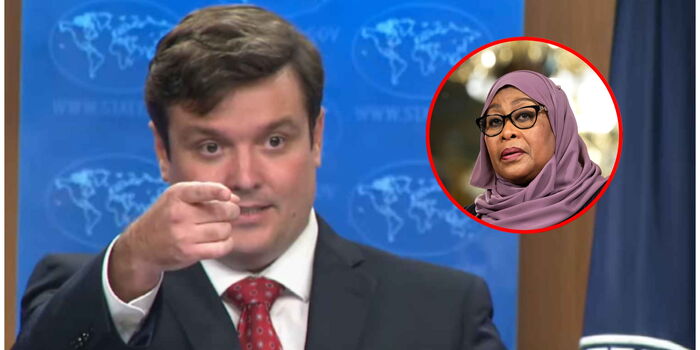
The United States has warned that it may cut its diplomatic relationship with Tanzania, accusing the East African nation of repeatedly violating human rights.
In a detailed statement released on Thursday, December 4, the U.S. Department of State said the Donald Trump administration was reassessing its partnership with Tanzania following growing concerns over government actions that appear to restrict freedoms and endanger civilians.
According to the statement, Washington is deeply troubled by what it described as continued repression, violent crackdowns, and other incidents that raise questions about Tanzania’s commitment to democracy.
The U.S. cautioned that if these issues persist, Tanzania could find itself blacklisted by the Trump administration—a move that would significantly strain the two countries’ long-standing relationship.
The State Department emphasized that the American government values its long history of cooperation with the people of Tanzania, a relationship that has supported economic development, regional security, and shared prosperity for many years.
However, the department noted that recent decisions made by President Samia Suluhu’s administration are creating uncertainty about the future of this partnership.
The statement stressed that the direction of U.S.–Tanzania relations now depends entirely on how President Suluhu’s government responds to its internal political challenges and whether it addresses the concerns raised by the international community.
“The future of our bilateral relationship with the Government of Tanzania will be based on its actions,” the statement reiterated, sending a clear message that Washington expects meaningful reforms.
State Department Principal Deputy Spokesperson Tommy Pigott added that the U.S. will no longer ignore situations where governments repeatedly violate fundamental rights.
He said that events surrounding Tanzania’s October 29 elections forced the U.S. to reconsider its stance, especially after the unrest allegedly put American citizens, foreign tourists, and Tanzanian residents in danger.
Pigott warned that such instability could weaken the progress the two countries have built together over decades.
More than a month after the presidential election, Tanzania continues to face intense criticism from global observers, many of whom have questioned the credibility of the election process and the conduct of security forces during the tense post-election period.
Fresh criticism emerged on Thursday after reports indicated that two prominent Tanzanian activists had their social media accounts restricted or taken down shortly after they posted content criticizing President Suluhu’s administration.
Human rights groups say this is further proof of shrinking digital and political freedoms in the country.
Earlier on Tuesday, December 2, President Suluhu defended the heavy deployment of security forces following post-election chaos. She claimed that the action was necessary to stop what she described as an attempted coup.
The President also accused the international community of applying double standards, questioning why Tanzania was being condemned while neighbouring countries allegedly used even harsher tactics against protesters without receiving similar criticism.
Meanwhile, human rights organizations have filed a petition with the International Criminal Court (ICC) in The Hague.
They are calling for a formal investigation into killings and other alleged abuses that occurred after the October 29 polls.
This move signals growing pressure on Tanzania to account for its actions as global attention continues to mount.
Join Gen z Official WhatsApp Channel to share your thoughts and stay updated on time
https://whatsapp.com/channel/0029VaWT5gSGufImU8R0DO30
