


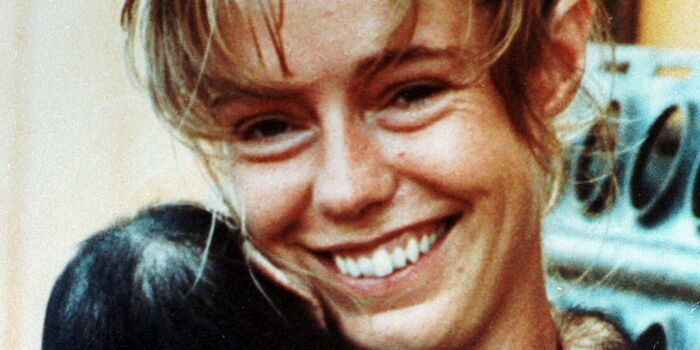
How the Kenyan Government Secretly Paid Millions to the Family of a British Woman Allegedly Killed by a President’s Son
The Kenyan government secretly paid £700,000, which is roughly Ksh120 million at current exchange rates, to the father of Julie Ward, a British tourist who was reportedly murdered in the Maasai Mara National Reserve in 1988.
According to reporting by The Telegraph, the payment was made in 1997 with the assistance of the British intelligence agency MI6. The money was intended to cover expenses incurred by Julie Ward’s father, John Ward, as he pursued justice for his daughter’s death.
The payment was reportedly made “off the record” in an effort to persuade John Ward to abandon his efforts to demand a full investigation into the circumstances surrounding his daughter’s death.
Julie Ward was allegedly killed while visiting the Maasai Mara, but initial official reports claimed her death was caused either by a wild animal attack or by lightning.
Years later, in 2004, an Egyptian pathologist named Adel Shaker, who had initially examined Julie’s remains, revealed that he had been intimidated into signing a false report.
According to Shaker, only Julie’s burnt left leg and lower jawbone remained after her disappearance in the Maasai Mara.
Shaker explained that his first report had concluded that Julie’s leg and jaw showed clean cuts, which indicated she had been murdered.
However, his superiors at the Kenyan government altered his findings and pressured him to sign the falsified report.
Shaker, fearing for his safety, eventually fled Kenya. He claimed that during a reinvestigation of the case, the police were determined to maintain the narrative that her death was either an accident or a result of natural causes.
The pathologist also alleged that some senior police officers referred to Julie Ward in a derogatory manner, describing her as “a loose girl” who allegedly had relationships with multiple men while at the game reserve.
“People told me this was the fate of one girl balanced by the fate of an entire nation,” Shaker said, highlighting the political pressures surrounding the case.
The main suspect in Julie Ward’s death was Jonathan Moi, the son of then-President Daniel Arap Moi. Jonathan consistently denied being at the Maasai Mara at the time of Julie’s death. He later died of cancer in 2019 without ever being formally charged.
However, new evidence, which the police had possessed for years before his death, proves that he was present at the scene. A handwritten statement from a camp official placed him near the site during the incident.
Julie’s brother, Bob Ward, only recently learned of this evidence. Over decades, John Ward had spent millions of pounds attempting to bring those responsible to justice before passing away in 2023.
Multiple people, including game wardens and a head ranger, were charged over the years, but every trial ended in acquittal due to lack of sufficient evidence.
Julie’s father consistently alleged that authorities in both Kenya and Britain had attempted to cover up her murder in order to protect powerful individuals within the government.
The case remains one of Kenya’s most notorious unsolved mysteries, with lingering questions about accountability, justice, and the influence of political power in high-profile criminal investigations.
Join Gen z Official WhatsApp Channel to share your thoughts and stay updated on time
https://whatsapp.com/channel/0029VaWT5gSGufImU8R0DO30
