


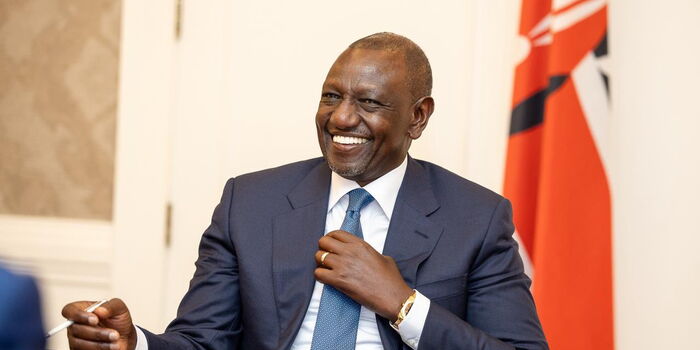
Kenya has reached a major breakthrough after securing a USD 1 billion deal — roughly Ksh129 billion — through a debt-for-food swap agreement with the United States. The arrangement is expected to boost the country’s food security efforts while easing pressure from its growing debt obligations.
The deal was finalised after President William Ruto met with Ben Black, the CEO of the U.S. International Development Finance Corporation (DFC), during his visit to Washington, D.C.
The agreement marks a significant step in Kenya’s push for innovative financing solutions that can support long-term development.
Under this arrangement, the DFC will buy part of Kenya’s costly commercial debt, making it possible for Kenya to repay the amount on more favourable terms with lower interest rates.
The money saved from reduced interest payments will then be directed toward essential food security programmes.
These include improving agricultural infrastructure, supporting climate-smart farming, enhancing nutrition initiatives, and strengthening systems meant to reduce hunger across the country.
President Ruto welcomed the move, describing it as both “smart” and “sustainable.” He thanked the DFC for agreeing to move forward with the debt-for-food security swap, saying the partnership will help Kenya replace expensive debt with more affordable financing options.
The DFC, a U.S. government agency that promotes development in low- and middle-income countries by working with the private sector, is expected to deepen its engagement with Kenya through this new deal.
Its involvement will play a major role in key sectors such as infrastructure, food systems, and energy, strengthening the long-standing ties between Kenya and the United States.
Ruto added that the government appreciates the DFC’s willingness to expand its partnership, noting that the collaboration aligns well with Kenya’s broader development goals and supports the push for inclusive and sustainable economic growth.
Beyond the debt swap, the DFC has also shown interest in supporting Kenya’s proposed National Infrastructure Fund. The agency may also help finance major upgrades to the country’s roads, ports, and the Jomo Kenyatta International Airport — projects that are expected to attract more investment and improve regional connectivity.
President Ruto further revealed that the DFC will station a full-time representative in Nairobi from January 2026. This move is expected to strengthen coordination, speed up project approvals, and encourage more U.S. investments in Kenya and the wider region.
The debt-for-development model adopted in this agreement gives Kenya much-needed financial breathing room while addressing long-term food insecurity challenges made worse by climate change, global economic shifts, and rising prices.
Meanwhile, President Ruto also held talks with IMF Managing Director Kristalina Georgieva. Their discussion focused on strengthening Kenya’s reform agenda and maintaining the country’s economic momentum.
The meeting took place at a time when Kenya appears to be sending mixed signals about its next steps with the IMF.
While the National Treasury has shown interest in seeking a funded programme, the Council of Economic Advisors seems more inclined toward using commercial markets for future financing options.
Overall, the new deal with the United States marks a major strategic win for Kenya — offering financial relief, development support, and renewed confidence from international partners.
Join Gen z Official WhatsApp Channel to share your thoughts and stay updated on time
https://whatsapp.com/channel/0029VaWT5gSGufImU8R0DO30
