


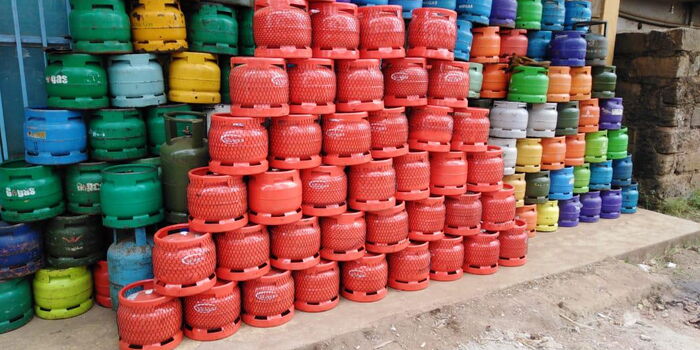
The government has made a major change in its plan to distribute gas cylinders, which were earlier promised to be given for free to vulnerable households.
Officials have now clarified that the gas cylinders will instead be sold at subsidised prices rather than being issued free of charge.
This shift marks a departure from President William Ruto’s 2022 campaign promise, where he pledged to provide free gas cylinders to low-income families as part of his administration’s clean energy initiative.
The project was meant to help poor households switch from using charcoal and firewood to cleaner cooking energy.
Speaking before the Senate Standing Committee on Energy on Monday, Energy and Petroleum Regulatory Authority (EPRA) Director General Daniel Kiptoo explained that the change was necessary to make the programme sustainable and to prevent misuse of public funds.
“Our main focus is to make gas affordable and safe for every Kenyan household. The subsidy model ensures that more people can access gas while also allowing EPRA to maintain the programme in the long term,” Kiptoo said.
Crackdown on Illegal Dealers
At the same time, Kiptoo revealed that the government had launched a nationwide operation targeting illegal gas dealers and counterfeit LPG cylinders. He said the crackdown aims to protect consumers from unsafe refilling practices and potential explosions caused by substandard gas cylinders.
According to Kiptoo, enforcement teams have already been deployed across the country to dismantle cartels operating illegal gas refilling plants. Several unlicensed facilities have been raided, and hundreds of fake cylinders have been confiscated. He added that the operation will be expanded to reach more regions in the coming weeks.
“We are fully committed to ensuring that every gas cylinder in the Kenyan market meets safety standards. Getting rid of fake and unsafe cylinders is not just a regulatory duty—it is about saving lives,” Kiptoo emphasized.
EPRA Tightens Safety Regulations
Kiptoo also briefed lawmakers on EPRA’s ongoing efforts to improve safety and regulation within the LPG sector. Senators pressed him for more details on how the authority is enforcing safety rules, seizing illegal cylinders, and ensuring that all operations in the gas market are properly licensed.
He told the committee that EPRA had increased its monitoring and inspection exercises after noticing a rise in illegal gas refilling sites operating without permits.
He warned that any operators found guilty of breaking the law would face prosecution and have their business licenses revoked.
During the session, Nairobi Senator Edwin Sifuna raised concerns about how EPRA plans to ensure safety, especially as schools and public institutions increasingly adopt LPG use.
He pointed to the tragic Embakasi gas explosion as a painful reminder of what can happen when safety regulations are ignored.
In response, Kiptoo assured senators that EPRA has strengthened its inspection systems and tightened safety measures to prevent similar incidents. He said the agency has introduced stricter monitoring procedures and higher inspection standards across the country.
After the committee meeting, senators toured EPRA’s storage facility where all confiscated illegal cylinders are kept. Most of these seized cylinders are stored in shipping containers awaiting legal proceedings.
Kiptoo noted that the agency will continue to destroy unsafe cylinders and maintain high safety standards to protect the public.
This latest development highlights the government’s attempt to balance affordability, safety, and sustainability in its clean energy agenda, even as critics point out that the promise of free gas cylinders has now turned into a paid plan.
Join Government Official WhatsApp Channel To Stay Updated On time
https://whatsapp.com/channel/0029VaWT5gSGufImU8R0DO30
