


Key Takeaways
- Decentralized finance, commonly known as DeFi, allows people to borrow, lend, trade, save, and invest using blockchain technology without depending heavily on banks or traditional financial institutions.
- DeFi systems operate through cryptocurrencies, blockchain networks, smart contracts, and decentralized applications that connect users directly with each other.
- Although DeFi has created exciting opportunities in the financial world, the industry is still growing and comes with risks such as hacking, scams, software weaknesses, and limited legal protection.
What Is Decentralized Finance (DeFi)?
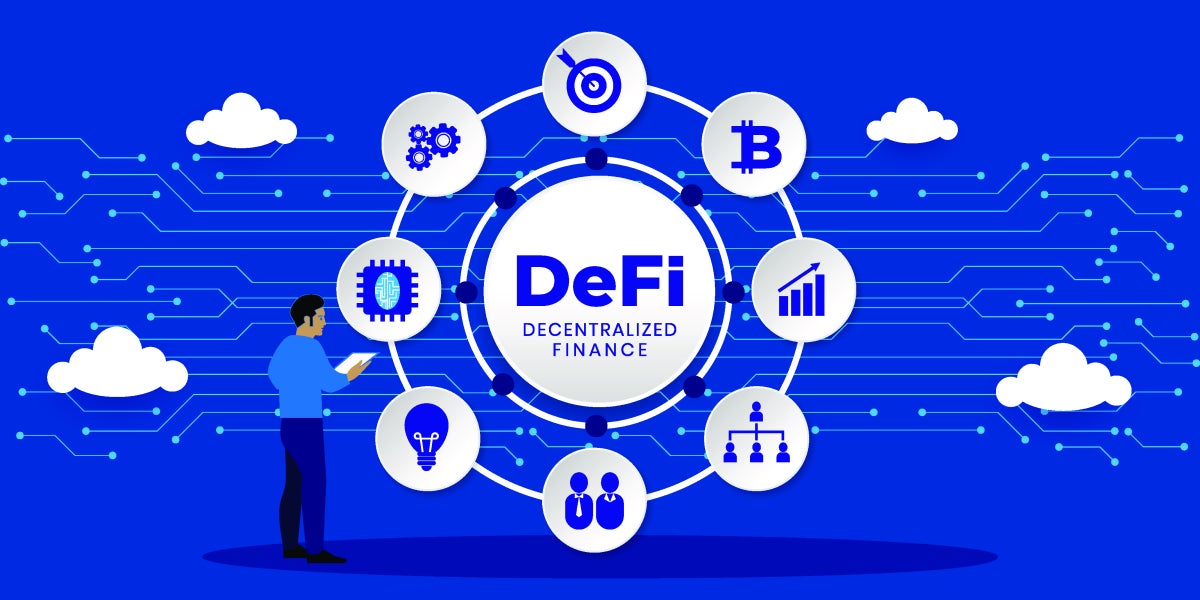
Decentralized finance, often shortened to DeFi, is a modern financial system built on blockchain technology. Its goal is to give people more control over their money by allowing them to complete financial transactions directly with one another instead of relying on banks, brokers, or other centralized institutions.
Traditional financial systems usually depend on organizations such as banks, payment companies, and financial regulators to process and monitor transactions. In countries like the United States, institutions such as the Federal Reserve and the Securities and Exchange Commission (SEC) help oversee these systems and create rules that financial institutions must follow.
DeFi introduces a different approach. Instead of using centralized organizations to manage financial activities, DeFi uses decentralized blockchain networks where transactions happen directly between users through automated technology. This creates a peer-to-peer financial environment where people can access services like lending, borrowing, investing, and trading from almost anywhere in the world.
The idea behind DeFi is to create a more open financial system that is available to anyone with an internet connection and a digital wallet.
How DeFi Works
DeFi operates through peer-to-peer financial networks powered by blockchain technology. These systems use advanced software, secure coding, internet connectivity, and smart contracts to replace many of the services traditionally offered by banks and financial companies.
In the traditional banking system, financial institutions act as middlemen. They help process transactions, approve loans, hold deposits, and manage accounts. In return, they charge service fees and maintain control over the financial process.
DeFi reduces the need for these intermediaries by allowing users to interact directly with each other using blockchain-based applications. Transactions are managed automatically through smart contracts, which are programs designed to execute agreements once specific conditions are met.
This technology allows people to send money, lend crypto assets, earn interest, or trade digital currencies without waiting for approval from a bank or financial institution.
The Role of Blockchain in DeFi
Blockchain technology is the foundation of decentralized finance. A blockchain is a digital ledger that records transactions securely across many computers connected to a network.
Every transaction made on a blockchain is grouped into blocks. These blocks are verified by the network before being permanently added to the chain. Once information is stored on the blockchain, changing it becomes extremely difficult because every new block is linked to the previous one.
This structure makes blockchain systems highly secure and transparent.
Because blockchain records are shared across many computers instead of being stored in one central location, no single person or organization has complete control over the network. This decentralized structure is one of the biggest reasons DeFi has become popular.
People use digital wallets to interact with blockchain networks. These wallets contain private keys, which work like passwords that give users access to their cryptocurrencies and digital assets.
When someone sends cryptocurrency to another person, ownership of the tokens is transferred through the blockchain network. The transaction is verified and recorded permanently, helping prevent fraud or unauthorized reversals.
DeFi Applications and Their Importance
DeFi applications, often called decentralized apps or dApps, are tools that allow users to access financial services through blockchain networks.
These applications are designed to simplify blockchain interactions for everyday users. They can be installed on smartphones, tablets, or computers, making DeFi services easier to use without requiring advanced technical knowledge.
Without these applications, users would need to interact directly with blockchain code using command-line tools, which would be difficult for many people.
DeFi apps allow users to:
- Borrow cryptocurrency
- Lend assets to earn interest
- Trade digital currencies
- Send payments
- Participate in investments
- Purchase digital collectibles
- Access savings-like services
For example, a user who wants to lend cryptocurrency can choose a lending option inside a DeFi app, set interest terms, and provide liquidity to borrowers. On the other hand, someone who needs a loan can search for lenders and agree to repayment conditions through the same platform.
Many DeFi applications automatically connect borrowers with lenders based on selected preferences and conditions.
Since blockchain networks are global, users can access DeFi services from almost any country without needing approval from traditional financial institutions.
Does DeFi Provide Complete Privacy?
One common misunderstanding about DeFi is that it offers total anonymity. While blockchain transactions usually do not display a person’s real name, transactions are still publicly recorded and traceable.
Anyone with enough technical knowledge can follow transaction histories on public blockchains. Governments and law enforcement agencies may also track blockchain activity when investigating fraud, financial crimes, or illegal activity.
This means DeFi offers pseudonymity rather than complete privacy.
Main Goals of Decentralized Finance
The primary purpose of DeFi is to create an open and decentralized financial system where people can transact directly with one another.
Some of the major goals and advantages of DeFi include:
1. Global Accessibility
Anyone with internet access and a digital wallet can participate in DeFi services. Unlike traditional banks, DeFi platforms are not limited by national borders or operating hours.
This creates financial opportunities for people who may not have access to banking services in their countries.
2. Lower Fees and Flexible Interest Rates
Traditional financial institutions often charge processing fees, maintenance fees, and service costs. DeFi reduces many of these expenses because transactions are automated through smart contracts.
Borrowers and lenders can also negotiate interest rates more freely within decentralized systems.
3. Transparency and Security
Most DeFi platforms operate on public blockchains where transaction histories and smart contracts can be viewed openly.
This transparency allows users to examine how platforms operate before using them. Additionally, blockchain networks are generally resistant to tampering because recorded data cannot easily be changed.
4. Financial Independence
DeFi reduces dependence on centralized institutions by allowing users to manage their own assets directly.
Instead of relying entirely on banks to hold and control funds, users maintain ownership through their personal wallets and private keys.
Getting Started With DeFi
People interested in decentralized finance usually follow several steps before using DeFi services.
Step 1: Learn About DeFi
Before investing or using any DeFi platform, it is important to research how blockchain technology and cryptocurrencies work. Understanding the risks and benefits can help avoid costly mistakes.
Step 2: Create a Digital Wallet
Users need a cryptocurrency wallet to interact with DeFi applications. Wallets store digital assets and provide secure access to blockchain networks.
Step 3: Buy Cryptocurrency
Most DeFi services require cryptocurrency for transactions. Users can purchase crypto assets from trusted cryptocurrency exchanges.
Step 4: Choose a DeFi Platform
Different DeFi applications provide different services such as lending, trading, staking, or yield farming. Users should select platforms that match their goals and risk tolerance.
Step 5: Connect the Wallet and Begin
Once the wallet is connected to a DeFi platform, users can begin borrowing, lending, trading, or investing directly through the application.
Real-World Example of DeFi
One well-known DeFi platform is Aave.
Aave is a decentralized lending protocol that allows users to lend their cryptocurrency and earn interest from borrowers. It also allows users to borrow digital assets without depending on traditional banks.
People who deposit assets into Aave provide liquidity to the platform and receive rewards in return. Borrowers can access funds by providing collateral through smart contracts.
Platforms like Aave demonstrate how DeFi can recreate financial services using blockchain technology.
Popular Uses of DeFi
The DeFi industry has expanded rapidly and now includes many different financial activities and services.
Decentralized Exchanges (DEXs)
Decentralized exchanges allow users to trade cryptocurrencies directly with one another without using centralized exchanges.
Popular platforms like Uniswap and PancakeSwap help users swap digital assets directly through blockchain networks.
Liquidity Providing
Liquidity providers deposit cryptocurrency into pools that help exchanges process trades smoothly.
These liquidity pools ensure users can buy and sell digital assets quickly without major delays.
In return for providing liquidity, users often receive rewards or transaction fees.
Lending and Yield Farming
Yield farming allows users to lend their crypto assets to others and earn interest.
Many DeFi platforms offer opportunities for users to lock funds into lending pools where borrowers can access them temporarily.
Some advanced platforms also provide flash loans, which are loans that must be borrowed and repaid within the same blockchain transaction.
Prediction Markets and Gambling
Certain DeFi platforms focus on prediction markets and blockchain-based betting systems.
Platforms like Polymarket allow users to place predictions on events such as politics, sports, and economic outcomes.
NFTs
Non-fungible tokens, commonly called NFTs, remain part of the broader DeFi ecosystem.
NFTs represent unique digital items such as artwork, music, collectibles, and gaming assets stored on blockchain networks.
Although the NFT market has slowed compared to previous years, it still attracts collectors and investors interested in digital ownership.
Understanding the Hype Around DeFi
Like many industries connected to cryptocurrency and blockchain technology, DeFi often experiences intense hype and speculation.
Some projects attract investors by promising high returns, financial freedom, or revolutionary technology. However, not every project succeeds, and some platforms collapse due to poor management, scams, or weak security systems.
The cryptocurrency market is also highly volatile, meaning prices can rise or fall dramatically within short periods.
Because of this volatility, people should carefully research projects before investing money into DeFi platforms.
Crypto Winters and Market Declines
The cryptocurrency industry has experienced several periods known as “crypto winters,” where digital asset prices fall sharply and remain low for long periods.
One major crypto winter occurred between 2022 and 2023 after the market surged during the COVID-19 pandemic.
During this time, the crypto industry lost billions of dollars in value because of company failures, market instability, and growing government regulation.
Interest in cryptocurrency markets began improving again toward the end of 2023 and early 2024, partly due to the approval of spot Bitcoin ETFs. However, volatility continued as prices fluctuated heavily.
These market cycles highlight the risks associated with DeFi and cryptocurrency investments.
Is DeFi Worth It?
For some people, decentralized finance offers exciting opportunities to earn passive income, access global financial services, or participate in innovative technology.
However, DeFi remains a developing industry with significant risks.
People considering DeFi investments should understand that the market is highly unpredictable. While some investors make substantial profits, others experience heavy losses.
Experts generally consider DeFi and cryptocurrency investments to be high-risk assets. Individuals planning for long-term financial security should approach the industry cautiously and avoid investing money they cannot afford to lose.
Risks and Concerns About DeFi
Despite its potential, DeFi faces several serious challenges.
Security Risks
Many DeFi platforms have suffered hacks and cyberattacks due to weaknesses in smart contracts or application design.
Hackers often target DeFi systems because large amounts of cryptocurrency are stored within decentralized platforms.
Lack of Regulation
DeFi operates across borders, making regulation difficult for governments and financial authorities.
Current laws were mostly designed for traditional banking systems and may not fully apply to decentralized technologies.
This creates several important questions:
- Who investigates crimes involving DeFi platforms?
- Which country’s laws apply to decentralized systems?
- How can regulators enforce rules on global blockchain networks?
These questions remain major topics of discussion worldwide.
Can You Make Money With DeFi?
Yes, many users earn money through DeFi activities such as:
- Yield farming
- Staking
- Providing liquidity
- Lending cryptocurrency
- Trading digital assets
However, profits are never guaranteed, and users can also lose money because of market crashes, scams, or technical failures.
Proper research and risk management are extremely important before participating in DeFi.
Is DeFi Safe?
DeFi is not yet as secure or stable as traditional financial systems.
Although blockchain technology itself is generally secure, many DeFi applications are still experimental and vulnerable to attacks.
Scams, fraudulent projects, and software vulnerabilities remain common within the industry.
For this reason, users should exercise caution and only use trusted platforms with strong reputations.
How DeFi Differs From Bitcoin
Many people confuse Bitcoin with DeFi, but they are not the same thing.
Bitcoin is a cryptocurrency used for digital payments and value storage.
DeFi, on the other hand, refers to the broader ecosystem of blockchain-based financial applications and services that allow people to transact directly with each other.
Bitcoin can be used within DeFi systems, but DeFi itself includes many platforms, tools, and services beyond Bitcoin alone.
DeFi Explained in Simple Terms
In simple language, decentralized finance is a digital financial system where people use cryptocurrencies and blockchain technology to send, receive, borrow, lend, and manage money directly with one another using internet-connected devices.
Instead of relying completely on banks or financial companies, DeFi allows users to interact through automated blockchain applications.
The Bottom Line
Decentralized finance is transforming the way people think about money and financial services. By using blockchain technology, DeFi aims to create a more open financial system where users can transact directly without relying entirely on centralized institutions.
The industry offers exciting possibilities, including global accessibility, faster transactions, lower fees, and greater financial independence. At the same time, DeFi still faces major challenges such as hacking risks, limited regulation, market volatility, and technological uncertainty.
As the industry continues to grow, traditional financial institutions may eventually integrate blockchain innovations into their own systems, creating a future where decentralized and traditional finance coexist.
For anyone interested in DeFi, careful research, patience, and a clear understanding of the risks are essential before investing or participating in decentralized financial activities.
Join TUKO KADI Official WhatsApp Channel to stay updated on time
https://whatsapp.com/channel/0029VaWT5gSGufImU8R0DO30
