


New Report Reveals Kenya’s Most Listened-To Radio Stations
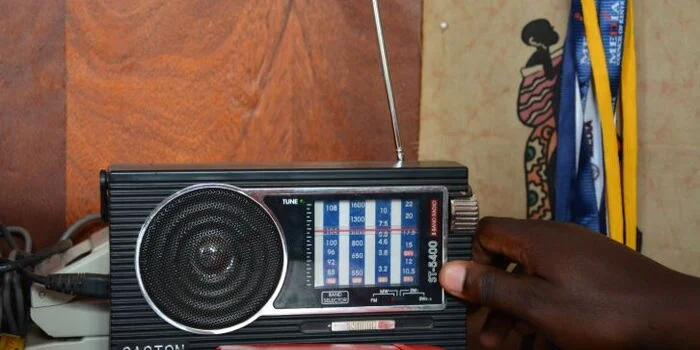
Radio remains the most popular and widely used media platform in Kenya, despite the rapid growth of digital and social media platforms. According to the latest Kenya Audience Tracker report by Ipsos, an estimated 33 million Kenyans tune in to radio regularly, making it the country’s most consumed form of media.
The report, which was released on Thursday, shows that radio continues to enjoy massive audiences across the country. This strong performance highlights the medium’s ability to adapt and stay relevant, even as more Kenyans gain access to smartphones, internet services, and digital content.
However, the survey also notes that the radio industry is becoming increasingly competitive. Traditional radio stations that dominated the airwaves for decades are now facing stiff competition from newer stations.
This shift has been driven by innovation, especially the rise of digital radio platforms that combine both audio and visual content to engage listeners more effectively.
One of the biggest surprises in the report is the rise of Radio 47, a relatively new station that has quickly disrupted the dominance of long-established stations such as Radio Citizen and Radio Jambo.
The survey shows that Radio 47 has made significant gains in both reach and listening time, proving that fresh content and modern presentation styles are attracting Kenyan audiences.
In terms of overall reach, Radio Citizen, which is owned by Royal Media Services (RMS), remained the most widely listened-to station, reaching 9.1 per cent of radio listeners. It was followed by Nairobi-based Radio Jambo at 3.8 per cent, closely trailed by Radio 47 at 3.7 per cent, a remarkable achievement for a newcomer.
Vernacular stations also performed strongly. Kameme Radio, which mainly targets audiences from the Mt Kenya region, recorded a 2.6 per cent reach. Inooro FM followed with 2.3 per cent, while Milele FM, Radio Maisha, and Ramogi FM each posted a reach of about 2.1 per cent, showing consistent popularity across different regions.
When it comes to audience share, which measures how much time listeners spend tuned in, Radio Citizen further strengthened its position at the top with a 17.0 per cent share. This indicates not only wide reach but also strong listener loyalty.
Radio 47 ranked second with an impressive 9.0 per cent audience share. The station has been praised for being among the first in Kenya to offer live audio-visual streaming, a move that has helped it attract younger and digitally savvy audiences. Radio Jambo followed with a 7.2 per cent share of total listening time.
Radio 47, which operates from Muthaiga Road, has also been making headlines within the media industry due to its aggressive talent recruitment strategy.
The station has reportedly attracted popular presenters and flagship shows from rival stations, increasing its visibility and appeal among listeners.
Among vernacular and regional stations, Kameme Radio recorded a 5.7 per cent audience share. Milele FM and Ramogi FM, both well known for their regional programming, each posted a 4.7 per cent share. Chamgei FM followed with 4.1 per cent, while Radio Maisha, based along Mombasa Road, registered a 3.9 per cent share.
The survey also highlights clear listening patterns. Radio audiences are highest in the early morning and evening hours, mainly during breakfast shows and drive-time programs. Listenership drops significantly late at night when fewer people are tuned in.
In terms of gender distribution, radio listening in Kenya is almost evenly split. Women make up 50.1 per cent of the audience, while men account for 49.9 per cent, showing that radio content appeals equally to both groups.
The data further reveals that radio is more popular in rural areas, which contribute 65.4 per cent of total listeners. Urban areas account for 34.6 per cent, indicating that radio remains a key source of information and entertainment outside major towns and cities.
Regionally, Central Kenya recorded the highest share of radio listeners at 18.4 per cent, followed by the Rift Valley at 14.9 per cent and the Western region at 13.5 per cent. Nairobi accounted for 9.6 per cent, while the Coast and Nyanza regions recorded 8.9 per cent and 3.9 per cent respectively.
North Eastern and Upper Eastern regions each posted 5.7 per cent, while Lower Eastern recorded 8.0 per cent. The North Western region had the smallest share of listeners at 2.7 per cent.
Overall, the Ipsos report shows that while radio remains deeply rooted in Kenyan society, the industry is evolving rapidly.
Innovation, digital integration, and fresh programming are reshaping the media landscape, giving both established and emerging stations new opportunities to compete for audiences nationwide.
Join Tutam Official WhatsApp Channel to stay updated on time
https://whatsapp.com/channel/0029VaWT5gSGufImU8R0DO30
