


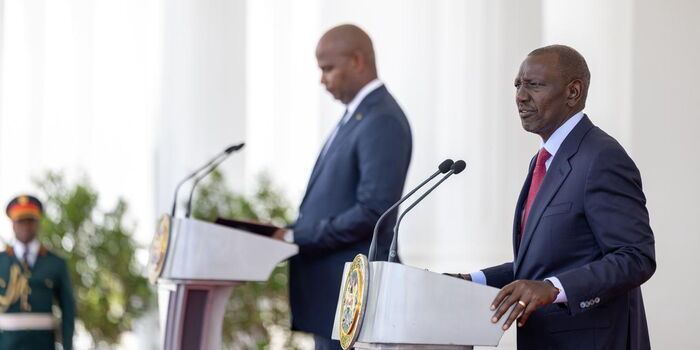
President William Ruto has finally addressed growing concerns over a possible fuel shortage affecting major petrol stations across the country, issuing both a warning and a clear plan on how the government intends to handle the situation.
Speaking at State House on Thursday, March 26, the President responded to questions about the government’s next steps as players in the energy sector begin taking precautionary measures to deal with expected supply disruptions.
His remarks come at a time when anxiety is rising among Kenyans, with some fuel stations already limiting or stopping the sale of petroleum products.
During the briefing, President Ruto pointed to the ongoing crisis in the Middle East as the main cause of the looming shortage. In particular, he highlighted disruptions along the Strait of Hormuz, one of the world’s most important oil transit routes.
He explained that the conflict has affected shipping logistics, forcing changes in transport routes and slowing down the movement of fuel and other essential commodities.
According to the President, these global challenges are already beginning to impact economies like Kenya’s, not only in fuel supply but also in the availability of key goods.
He stressed that the situation is real and could worsen if not properly managed, especially given how dependent many countries are on stable energy supply chains.
At the same time, President Ruto delivered a strong warning to oil marketers across the country. He made it clear that the government will not tolerate any attempts to create artificial shortages with the aim of increasing prices and making unfair profits.
He emphasized that such practices would be dealt with firmly, noting that protecting Kenyan consumers remains a top priority.
The President assured the public that his administration is actively monitoring all licensed oil marketers. He warned that any company found violating its licensing terms or engaging in unethical practices would face serious consequences.
This, he said, is part of a broader effort to ensure fairness in the market and prevent exploitation during a time of uncertainty.
Beyond fuel, the President acknowledged that Kenya’s economy faces wider risks due to the Middle East crisis. The same trade routes affected by the conflict are crucial for exports such as flowers, tea, coffee, and sulphur products.
Disruptions in these routes could therefore have a ripple effect, affecting trade, prices, and overall economic stability.
To address the situation, President Ruto revealed that he has directed the Ministry of Energy and Petroleum to take immediate action.
The ministry has been tasked with working closely with current fuel suppliers while also exploring alternative sources of oil.
The goal is to reduce Kenya’s reliance on Middle Eastern supply chains and ensure a steady flow of fuel into the country.
He further disclosed that some progress has already been made in identifying alternative supply options, although he did not go into specific details.
He reassured Kenyans that the government will continue to closely monitor developments and respond accordingly as the global situation evolves.
In addition, the President said his administration will tighten control over licensing within the energy sector.
He warned that any player attempting to take advantage of the crisis for personal gain would not be spared, reinforcing the government’s commitment to maintaining order and accountability in the industry.
The developments come as pressure continues to build across multiple sectors. Several regional airlines have already notified customers of expected fare increases starting April 1, largely driven by rising fuel costs.
Meanwhile, some petrol stations across the country have issued notices indicating temporary suspension of fuel sales, further fueling public concern.
Overall, the President’s message was clear: while the global situation presents real challenges, the government is taking active steps to manage the crisis, protect consumers, and ensure that the country does not face a severe or prolonged fuel shortage.
Join Kenya Govt Official WhatsApp Channel to stay updated on time
https://whatsapp.com/channel/0029VaWT5gSGufImU8R0DO30
