


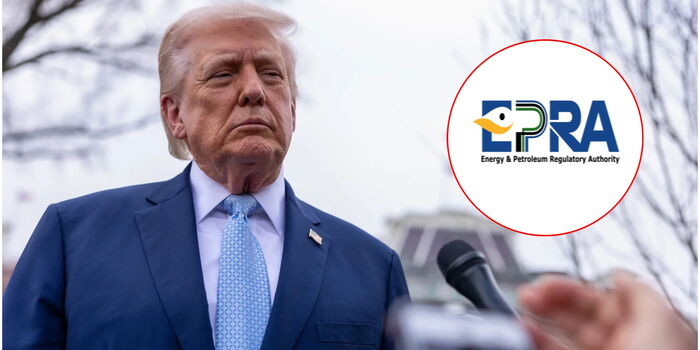
Kenya Faces Possible Fuel Price Increase After Trump’s New Threat Escalates Oil Market Fears
Kenya, along with many other countries that depend heavily on imported fuel, is now bracing for the possibility of a fresh fuel price increase after tensions around the Strait of Hormuz pushed global oil prices sharply higher.
The latest jump in oil prices came after a new escalation involving the strategic Middle East shipping route, following a tough warning from U.S. President Donald Trump.
Trump warned Iran that he could target critical infrastructure if the crucial waterway is not reopened, a statement that immediately sent shockwaves through global energy markets.
Investors and oil traders quickly reacted to the threat, fearing that the standoff could drag on and seriously disrupt the flow of crude oil across the world.
As a result of the renewed tensions, Brent crude prices surged past KSh 14,000 (about USD 110) per barrel during early Monday trading in Asian markets. This sharp rise has once again reminded the world just how sensitive oil prices are to geopolitical tensions in the Gulf region.
The Strait of Hormuz remains one of the most important oil transit routes in the world, carrying nearly one-fifth of all global oil shipments.
The narrow channel, located between Iran and Oman, plays a major role in connecting oil producers in the Middle East to international buyers.
Whenever there is instability in this route, the effects are felt almost immediately across world markets.
Fuel prices often rise, transport costs increase, and inflation risks grow, especially for countries like Kenya that rely on imported petroleum products.
On the wider Middle East conflict, Trump recently told Fox News that there was still a “good chance” that an agreement could be reached on Monday.
However, in his usual hardline tone, he also said he was considering “blowing everything up and taking over the oil” if talks failed. Such remarks have only added to the uncertainty already surrounding the situation.
The market is also reacting to growing fears that oil and gas shipments from the region could face even more severe disruptions. Tehran has reportedly threatened to target vessels attempting to pass through the strait, especially in response to ongoing U.S. and Israeli airstrikes.
This has raised concerns among shipping companies, insurers, and governments around the world.
How Kenya Could Feel the Impact
Back home, the developments have raised real concern among Kenyans over the likelihood of higher pump prices in the coming days. The concern comes at a sensitive time, with the Energy and Petroleum Regulatory Authority (EPRA) expected to announce its next fuel price review on April 14.
Because Kenya imports most of its refined petroleum products, any rise in international oil prices usually finds its way into the local market very quickly. EPRA’s monthly pricing formula directly factors in global fuel costs, exchange rates, and shipping charges.
This means that if the current spike in crude prices continues, Kenyan motorists and businesses could soon face more expensive petrol, diesel, and kerosene.
Beyond crude prices alone, the tensions in the Gulf have also increased shipping risks. Tanker insurance premiums are likely to rise as companies factor in the danger of attacks or delays in the Strait of Hormuz.
These additional costs could significantly raise the final landed price of fuel imported into Kenya, adding even more pressure ahead of the next review.
Despite the rising tensions between Trump and Iran, which continue to put global markets on edge, the Kenyan government has moved to calm public fears by assuring citizens that steps are being taken to shield consumers from sudden price shocks.
President William Ruto has previously maintained that his administration remains committed to keeping fuel prices stable and protecting ordinary Kenyans from the effects of global crises.
He has also stressed the government’s determination to crack down on individuals and businesses attempting to exploit the situation by bringing in substandard petroleum products.
National Treasury Cabinet Secretary John Mbadi has also reassured the public that the government is closely watching movements in international oil prices.
According to the Treasury, authorities are prepared to step in where necessary to protect the economy from severe external shocks that could hurt households and businesses.
At the same time, Energy Cabinet Secretary Opiyo Wandayi said Kenya still has enough fuel reserves and that supply chains into the country remain stable despite the ongoing tensions in the Gulf.
However, there is still a growing concern over the country’s reserve levels. Government estimates currently place Kenya’s fuel reserves at around 16 days.
This means that, in theory, the reserve cushion could begin thinning out around the same time EPRA is due to make its next pricing decision.
For many Kenyans, this creates fresh anxiety that the next fuel review could bring another painful increase in pump prices, which would likely push up transport costs, food prices, and the general cost of living across the country.
If global tensions continue and oil prices remain elevated, the pressure on Kenya’s economy could become even more pronounced in the weeks ahead.
Join Kenya Govt Official WhatsApp Channel to stay updated on time
https://whatsapp.com/channel/0029VaWT5gSGufImU8R0DO30
