


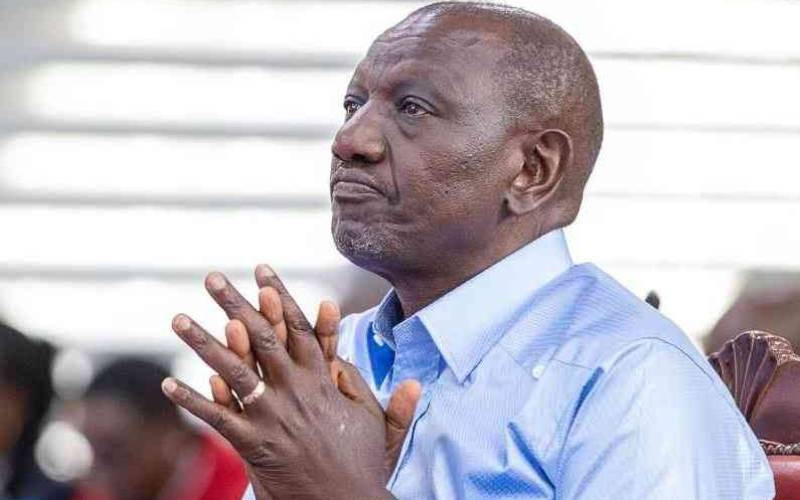
Bomet Residents Respond to President Ruto Over Concerns on Low Voter Registration
Residents from Bomet County in the Rift Valley region have responded to President William Ruto after he expressed concern about low voter registration among youth in his home region.
The president had warned that millions of eligible voters across the country risk being left out of the upcoming elections if they fail to register, especially urging young people in the Rift Valley to secure national IDs and voter cards early.
Ruto noted that it would be worrying for him to campaign across the country while his own backyard fails to show strong participation in the electoral process.
He estimated that more than 2.3 million eligible voters could miss out on voting if they do not take advantage of the ongoing registration opportunities.
However, residents in Bomet have pushed back against these concerns, saying the low enthusiasm for voter registration is largely due to political frustration and a sense of neglect in the region.
According to them, many young people feel disappointed and less motivated because they believe development promises made during campaigns have not been fully delivered.
Some residents argue that the Rift Valley region, despite being politically aligned with the president, has not seen the level of development they expected after the elections.
They say this has created a sense of disillusionment, especially among the youth, who now feel less connected to the political process.
One resident, Ambrose Kimutai, said that many locals no longer see the importance of registering as voters because they feel their needs have not been addressed.
He explained that during campaigns, promises were made about development projects, but according to him, little has changed on the ground since the president took office.
Others also pointed out that some local leaders are not effectively communicating the president’s development agenda to the people.
They urged the head of state to engage more directly with the region and ensure that projects are visible, instead of relying only on allies who may not accurately represent the situation at the grassroots level.
Another resident, Bernard Cheruiyot, said that many young people have lost motivation and confidence in the current leadership, which has contributed to their reluctance to participate in voter registration.
He added that the youth feel disconnected from the political system and are less convinced that their participation will bring meaningful change.
Despite these concerns from residents, data from the Independent Electoral and Boundaries Commission (IEBC) shows a different picture.
The Rift Valley region actually led all regions in new voter registrations, recording 671,958 new voters during the recent continuous registration exercise.
Within the Rift Valley, Uasin Gishu County recorded the highest numbers at 64,300 new registrations, followed by counties such as Turkana, Nandi, Kericho, and Bomet.
Other regions also posted significant numbers, with Central Kenya registering 399,220 new voters, while Nairobi topped individual counties nationwide with 276,886 registrations, representing 11.8% of the total.
In contrast, some counties such as Lamu, Isiolo, Mandera, Samburu, and Nyandarua recorded relatively lower numbers.
However, surprisingly strong performance was also seen in some North Western counties like Turkana and West Pokot, which even surpassed several larger counties including Mombasa, Nyeri, Murang’a, and Kisumu.
The mixed reactions between political leaders’ concerns and official registration data highlight a growing debate about voter engagement in Kenya, especially among young people, and whether political dissatisfaction is affecting participation or if registration efforts are still gaining momentum across different regions.
