


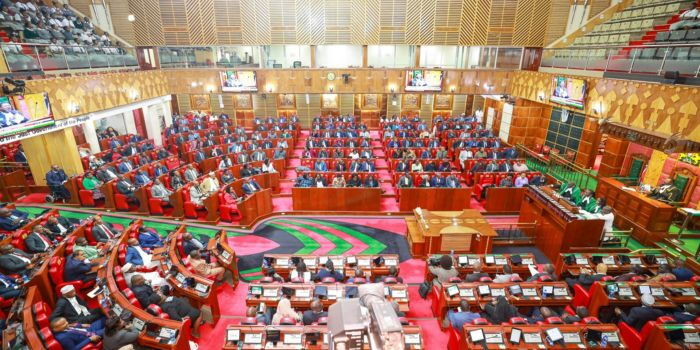
Justice Roselyne Aburili of the High Court has dismissed a petition that sought to force Parliament to immediately pass a law allowing Kenyans to recall Members of Parliament (MPs).
In her ruling delivered on Tuesday, July 7, the judge said the case had been filed too early because Parliament is already considering legislation that would establish the legal process for recalling elected MPs.
Justice Aburili explained that the court should not interfere with Parliament while it is still debating the proposed Elections (Amendment) Bill, 2024. According to the judge, both the petitioners and the court should allow lawmakers to complete the legislative process before any legal action is taken.
“This petition is premature and not ripe for determination and that the petitioners, as well as the Court, should let Parliament legislate and wait for the outcome,” Justice Aburili ruled.
In her judgment, the court acknowledged that Article 104 of the Constitution gives Kenyans the right to recall elected leaders before the end of their term.
However, the judge emphasized that this constitutional right cannot be exercised unless Parliament enacts a law outlining how the recall process should be carried out.
Justice Aburili further stated that the Independent Electoral and Boundaries Commission (IEBC) does not have the legal authority to create recall procedures on its own. She noted that doing so would amount to taking over Parliament’s constitutional responsibility of making laws.
The judge explained that although the Constitution recognizes the right to recall MPs, the provision is not automatically enforceable.
Instead, it requires Parliament to pass legislation that clearly defines the rules, procedures, and conditions under which voters can remove an elected representative from office.
The petition was filed after a group of seven Kenyan citizens attempted to begin the process of recalling Mwenda Gataya Mo Fire, the Senator for Tharaka Nithi, over claims of abuse of office.
The group argued that they wanted to exercise their constitutional right to remove an elected leader whom they believed had failed to serve the public interest.
On August 21, 2024, the petitioners wrote to the IEBC requesting guidance on the legal procedures required to recall the senator. They hoped the electoral commission would provide the necessary framework to begin the process.
However, in a response dated September 9, 2024, the IEBC informed the petitioners that it was unable to facilitate the recall.
The commission explained that it was not fully constituted at the time and that there was no law in place establishing a legal mechanism for recalling Members of Parliament.
After the appointment of a new team of IEBC commissioners, the petitioners once again approached the commission seeking the same information.
Despite the changes in the commission’s leadership, the IEBC maintained its earlier position, stating that it could not proceed without legislation passed by Parliament. This prompted the group to move to the High Court in search of legal intervention.
In the case before the High Court, the petitioners named the Independent Electoral and Boundaries Commission, the National Assembly, and the Office of the Attorney General as respondents. They argued that the continued absence of a recall law had denied Kenyans an important constitutional right guaranteed under Article 104.
Despite these arguments, Justice Aburili ruled that Parliament should first be allowed to complete deliberations on the pending Elections (Amendment) Bill, 2024.
The proposed legislation is expected to establish a comprehensive legal framework governing the recall of Members of Parliament, including the procedures that voters must follow.
The court’s decision means that Parliament has been given additional time to debate, amend, and eventually pass the Bill before any court can intervene on the matter. Until that process is completed, the constitutional right to recall MPs cannot be implemented.
The ruling is considered a significant setback for many Kenyans and civil society groups who have been calling for stronger accountability mechanisms for elected leaders.
Many had hoped the court would compel Parliament to act more quickly so that voters could exercise their constitutional right without further delays.
Although the Constitution clearly recognizes the right of citizens to recall Members of Parliament before the expiry of their terms, that right remains largely theoretical because there is still no operational law to support it.
Without legislation, voters cannot legally begin or complete a recall process regardless of the circumstances surrounding an elected leader.
As things stand, Kenyans who wish to remove MPs accused of poor performance, misconduct, abuse of office, or failure to fulfill their responsibilities have no legal avenue to do so. They will have to wait until Parliament enacts the necessary legislation before the recall process becomes available.
The judgment also places the responsibility firmly on Parliament to determine how the recall system will operate.
Lawmakers will be expected to define the grounds that can justify the recall of an MP, the number of signatures or support required from voters, the verification process, timelines for conducting a recall vote, and the role the IEBC will play in managing the entire exercise.
Once the proposed law is passed, it is expected to provide clear guidelines that will enable Kenyans to exercise their constitutional right to hold elected Members of Parliament accountable through a structured and legally recognized recall process. Until then, the High Court has made it clear that the matter remains in Parliament’s hands.
Join WANTAM Official WhatsApp Channel to stay updated on time
https://whatsapp.com/channel/0029VaWT5gSGufImU8R0DO30
