



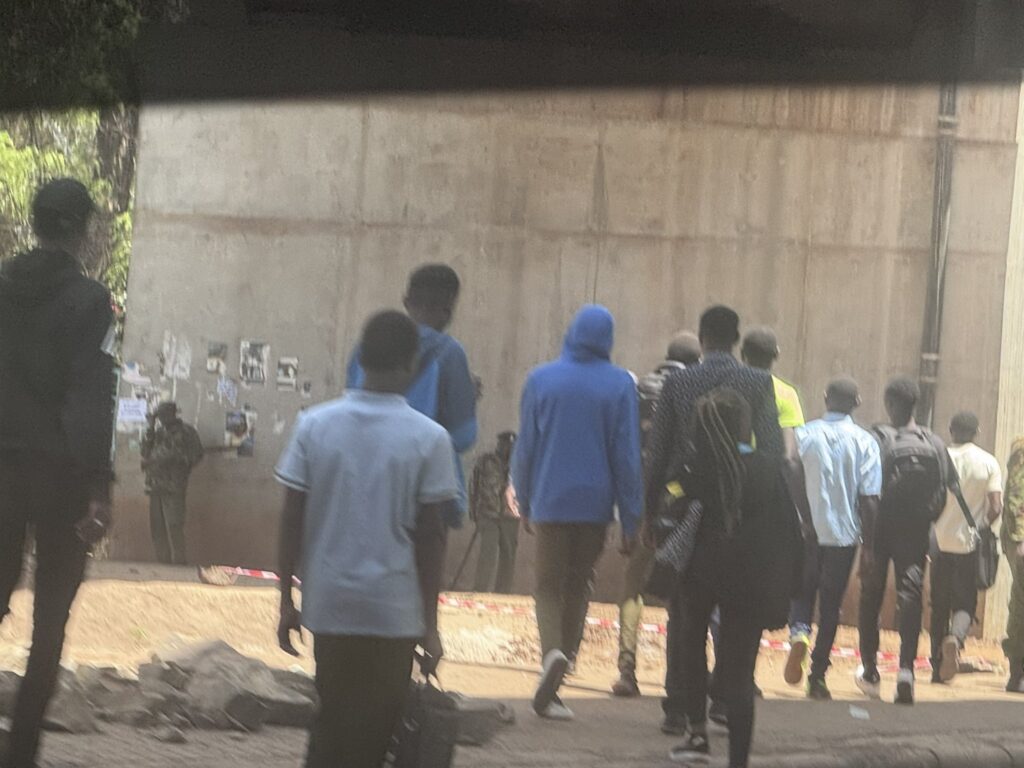
Tensions were high in Nairobi’s Central Business District (CBD) as police were deployed heavily ahead of planned university student protests.
The protests, driven by dissatisfaction with government policies and actions, prompted a large deployment of law enforcement officers across key areas in the city.
Riot police, equipped with tear gas and clubs, were stationed along major streets such as Kenyatta Avenue and near popular gathering spots like the Archives, which often serves as a focal point for demonstrations.

Many businesses in the CBD closed their doors early, fearing potential clashes between protesters and police.
The uncertainty surrounding the situation left the usually bustling streets unusually quiet.
Also Rea



Some citizens, especially business owners, expressed frustration at the recurring disruptions caused by the protests, noting the financial losses they have incurred over time.
The government has taken a firm stance against the demonstrations, with authorities warning against any unlawful activities that could disrupt public order.

Despite the heavy police presence, organizers remained committed to voicing their grievances, which range from economic inequality to corruption.
There have also been calls from civil society for peaceful dialogue, urging both the government and protesters to engage in meaningful discussions to prevent any violence from breaking out.
However, the potential for unrest remains, as Nairobi continues to brace for the protests.
Sources indicate that this tense environment has led to increased concerns about public safety, with residents being advised to avoid the CBD if possible during the protests.
