


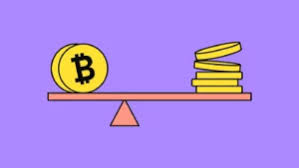
If you’re looking to expand your trading capabilities but don’t have many cryptocurrencies like Bitcoin or other altcoins, you can still leverage the resources you already own. This approach allows you to maximize your investment potential without needing to own the full amount of assets you’re using. However, it’s important to note that this method carries significant risk, so it’s not suitable for everyone.
What is Margin Trading?
Margin trading allows you to open a position using borrowed funds. For example, if you use a 2x leverage, you can double your trade size without having the equivalent amount in your portfolio. Let’s say your assets appreciate by 10%. With 2x leverage, you will end up with a 20% profit. In typical trades, you would usually use a leverage of 1:1, meaning you are not borrowing any additional funds.
Margin trading exists because of the lending market, where lenders offer money to traders to invest in the market. These lenders earn interest on the money they lend out, while traders can use the borrowed funds to make more substantial profits than they could otherwise. Some exchanges, like Poloniex, let registered users lend out their funds, such as Bitcoin and altcoins, to earn interest. In some cases, the exchange itself might lend money to traders. A disadvantage of lending through an exchange is that your coins are not stored in your personal wallet but instead are kept within the exchange’s system.
Risks of Margin Trading
Margin trading comes with specific costs, including the interest on the borrowed funds and fees charged by the exchange. The higher the leverage you use, the higher the potential for greater profits—but also, the risk of losing more money. The worst-case scenario is losing your entire investment. This is known as the liquidation value, where your position is automatically closed to prevent further losses. If the market moves unfavorably, you could lose all the money you invested.
For example, if you trade with leverage of 1:1, your liquidation position is zero. If you use a 2:1 leverage, your liquidation position might be much higher. So, if you have one Bitcoin worth $1,000 and use a 2:1 leverage, your liquidation point could be $500. This means you could lose your original $1,000 investment plus any applicable fees if the market moves against you.
Margin Trading Tips
- Risk Management: Control your emotions when margin trading. It’s easy to get greedy, but you must know how much money you’re willing to risk. Decide in advance your profit target or stop-loss point to avoid unnecessary stress.
- Monitor the Market: Cryptocurrencies are volatile, so margin trading increases your risk. It’s best to use short-term strategies and regularly check on your positions to minimize the danger of liquidation. Even though daily margin trading fees are relatively low, they can accumulate over time.
- Capitalize on Price Movements: The price of cryptocurrencies can swing dramatically. If the price drops too much, you could reach your liquidation point. To manage this risk, use price dips as opportunities to set realistic closing targets that could leave you with a decent profit if the price bounces back.
Exchanges That Offer Margin Trading
Many exchanges now offer margin trading, but it’s vital to limit how many coins you keep on exchanges, as they are prime targets for hackers. Over the years, several exchanges have been breached, with notable hacks like Bitfinex in 2016, where one-third of their Bitcoin holdings were stolen.
Margin trading offers a significant advantage in that you can take larger positions with fewer assets. For instance, if you have 5 Bitcoins and want to hedge against Bitcoin’s price dropping, you can leverage your position with a 10x multiplier. This would only require 0.2 Bitcoins in the exchange, keeping the remaining 4.8 Bitcoins safe in your wallet.
Some exchanges to consider for margin trading include:
- Bitmex: Known for its high leverage options, offering up to 100x leverage for both long and short positions. It is user-friendly with good customer support.
- Plus500: A globally available platform offering various trading options including Bitcoin and altcoins. Plus500 is fully regulated and provides excellent customer support. You can start trading with a demo account and set up margin leverage at 1:2.
- Poloniex: A large exchange where you can use 2.5x leverage for margin trading with a wide variety of altcoins. However, interest rates can be high if you are shorting.
- Bitfinex: Offers up to 3.3x leverage and is widely used for BTC and USD trading. Its interface is intuitive, and it offers a variety of assets to trade.
- AVAtrade: A regulated platform that offers trading for Bitcoin and major altcoins. It also provides a demo account for practice before diving into real trading.
Introducing BlockLoan
BlockLoan offers a way for people to borrow money to use as leverage, just like in the stock and bond markets. By pledging assets as collateral, traders can borrow additional funds to increase their market positions. This is an effective way to maximize profits without needing more capital upfront.
In the stock market, an investor can pledge their shares to borrow money and buy even more shares. If the price of the shares increases, the investor makes a profit by selling the shares at a higher price than the purchase price. The concept is the same in cryptocurrency markets, and while it’s still evolving, the idea of leveraging in the crypto world could greatly affect market prices in the future.
Is Margin Trading a Good Idea?
Margin trading is best suited for experienced traders who understand the risks and have a clear purpose for using leverage. It’s important to conduct thorough research, especially since trading with borrowed money can quickly increase your stress levels if the market moves unfavorably. If you’re not comfortable with high-risk strategies, margin trading may not be for you. However, if you choose to proceed, it’s crucial to learn about margin ratios, calls, and strategies that help you manage risk.
Ratios, Risks, and Bet Size
Margin trading carries considerable risk, especially when leveraging. If you use too much leverage too quickly, you could lose all of your borrowed funds. For example, if you use a 4:1 leverage and the market falls by 25%, your position will be called in, and you will lose everything.
The leverage ratio determines how much risk you’re taking on. A 2:1 leverage means you can afford a 50% loss before the position is closed, while an 8:1 leverage can result in a position closing at a much smaller drop of 12.5%. It’s essential to add more funds if you don’t want your position to close prematurely, but be cautious as this can lead to deeper losses.
Margin Trading and Taxes
When trading cryptos, short-term capital gains taxes will apply to profits made from margin trading. However, if you hold your cryptocurrencies for the long term, you can avoid short-term capital gains tax and benefit from lower long-term capital gain rates. Always ensure that you are aware of your tax obligations when trading cryptocurrencies.
This comprehensive approach to margin trading in cryptocurrency can help you make informed decisions, but always be cautious and remember that the risks are high.
Join Gen z and millennials TaskForce official 2025 WhatsApp Channel To Stay Updated On time the ongoing situation https://whatsapp.com/channel/0029VaWT5gSGufImU8R0DO30
