


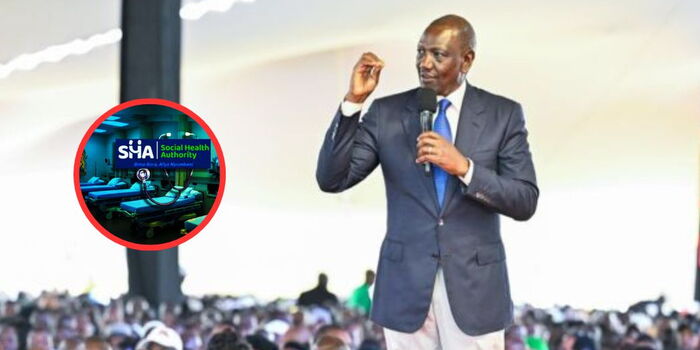
Teachers Threaten to Quit SHA as Ruto Defends Health Scheme
The Kenya Union of Post-Primary Education Teachers has warned that teachers across the country could soon withdraw from the Social Health Authority, raising fresh concerns about the future of the government’s new healthcare system.
This comes even as President William Ruto continues to publicly defend the scheme, insisting that it is working and benefiting millions of Kenyans.
Speaking in Kisumu on the evening of Friday, March 27, KUPPET Secretary-General Akello Misori expressed deep frustration with how the scheme is being run.
He said the union is quickly losing trust in SHA due to what he described as major failures in service delivery. According to him, unless urgent changes are made, teachers may have no option but to completely pull out of the system.
Misori strongly criticized the leadership of SHA, saying it has failed to build confidence among teachers who had initially supported the transition.
He noted that the scheme has not delivered on promises made by government officials, leaving many teachers disappointed and stranded.
He warned that patience within the union is running out and that a mass withdrawal could happen if the situation does not improve soon.
He further revealed that agreements reached during a previous meeting with Health Cabinet Secretary Aden Duale have not been implemented.
These included setting up proper communication and feedback systems, as well as deploying officers on the ground to help teachers navigate the new healthcare system.
According to Misori, the failure to act on these promises has only worsened the situation and increased frustration among union members.
Despite these complaints, President Ruto has continued to defend the SHA programme, saying it has transformed healthcare access in Kenya.
Speaking during the 19th Ambassadors and High Commissioners Conference held in Nairobi, the president stated that more than 30 million Kenyans have already registered under the scheme.
He argued that the new system has reduced the need for families to raise funds through harambees to pay medical bills.
Ruto also pointed to what he described as real success stories from citizens who have benefited from the scheme.
According to him, many Kenyans have had large hospital bills fully covered, ranging from tens of thousands to even over a million shillings.
He insisted that these examples show the positive impact SHA is already having on the healthcare system.
However, KUPPET leaders say the situation on the ground tells a very different story. The union claims that many hospitals across the country are still hesitant or unwilling to provide outpatient services to teachers under SHA.
This has made it difficult for teachers to access treatment, forcing some to pay from their own pockets despite being registered under the scheme.
The latest warning by the union comes just weeks after KUPPET issued a seven-day strike notice on March 5. At the time, the union was protesting delays in medical cover, as well as unpaid claims under SHA.
This raised fears of a possible nationwide teachers’ strike, which could disrupt learning in many schools if the issues are not addressed.
Union officials have also highlighted ongoing technical and operational challenges affecting the system.
These include frequent system failures, delays in processing hospital claims, and a growing number of healthcare facilities refusing to accept patients under SHA. As a result, many teachers feel that the scheme is not reliable and does not meet their healthcare needs.
The crisis has been made worse by the standoff between the government and private hospitals under the Rural Private Hospitals Association.
The hospitals have reportedly declined to offer services under SHA due to unpaid government claims said to exceed Ksh30 billion.
This has further limited the number of facilities available to teachers and other Kenyans seeking treatment.
At the same time, teachers who were previously covered under a private medical scheme have raised concerns about the transition to SHA.
They argue that the new system has reduced the benefits they were guaranteed under their Collective Bargaining Agreement (CBA), leaving them exposed to weaker coverage and more uncertainty.
KUPPET Chairman Omboko Milemba also criticized the new processes introduced under SHA. He said teachers are now being forced to follow complicated procedures, such as using paybill numbers to make contributions, unlike the previous system which was simpler and more efficient.
According to him, these changes have made access to healthcare more difficult instead of improving it.
Overall, the growing tension between the government and teachers’ unions highlights serious concerns about the implementation of SHA.
While the government continues to promote it as a major success, many teachers on the ground feel that the system is failing them, setting the stage for a possible confrontation if urgent reforms are not made.
Join Kenya Govt Official WhatsApp Channel to stay updated on time
https://whatsapp.com/channel/0029VaWT5gSGufImU8R0DO30
