


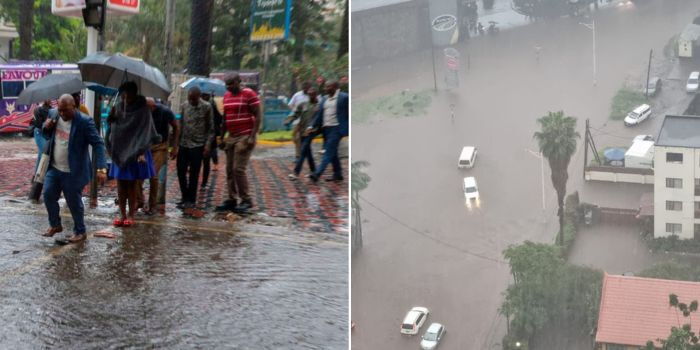
Kenya Met Says Heavy Rains Could Reduce by Mid-May but Warns Kenyans to Stay Alert
Kenyans may soon get some relief from the heavy rains that have been affecting many parts of the country after the Kenya Meteorological Department announced that the ongoing downpours are expected to reduce in the coming weeks.
In an advisory issued on Friday, May 1, the weather department explained that the intense rainfall currently being experienced in several regions is likely to decrease significantly by the middle of May 2026.
According to the forecast, the first week of May will still experience heavy and widespread rainfall in different areas, but weather conditions are expected to improve gradually as the month progresses.
The department stated that the second half of May is expected to be much drier than normal in many parts of the country.
This change in weather patterns is expected to mark the end of the March-April-May long rain season that has brought persistent rainfall and flooding concerns in several counties.
“The outlook for May indicates that the second half of the month is likely to be drier than average, implying the cessation of the March-April-May 2026 rainfall season,” Kenya Met stated in its latest advisory.
The meteorological department further noted that by the final weeks of May, most regions across Kenya are likely to experience generally dry conditions.
This will signal the transition from the rainy season into the cold and dry season, which is normally experienced in many parts of the country after the long rains end.
However, the department clarified that not all regions will stop receiving rain immediately. Areas such as Central Kenya, Western Kenya, the Lake Victoria Basin, and the Coastal region are expected to continue receiving rainfall even into June.
Despite this, the amount of rainfall expected in these regions is likely to remain below the normal average levels usually recorded during that period.
As the country moves into the cooler season, Kenya Met also warned that several areas, especially those located in the Highlands, may begin experiencing very low temperatures.
Residents living in cold regions have therefore been advised to prepare for chilly weather conditions that could affect daily activities, health, and farming.
Even though rainfall is expected to reduce later in the month, the weather department cautioned Kenyans against lowering their guard too early.
The heavy rains expected during the first week of May could still trigger serious problems in several regions, including flooding, waterlogging, and transport disruptions.
Road networks in some areas may become impassable due to rising water levels, muddy conditions, and damaged infrastructure. Motorists and pedestrians have therefore been urged to exercise caution, especially in flood-prone regions and low-lying areas.
The department also warned that the continued wet weather conditions may increase the risk of disease outbreaks in affected regions.
Areas with poor drainage and sanitation systems are particularly vulnerable to waterborne diseases such as cholera, typhoid, and diarrhea. Additionally, stagnant water left behind by floods may create breeding grounds for mosquitoes, increasing the spread of malaria in some regions.
Farmers have also been cautioned about the possible negative effects of the prolonged rains. According to Kenya Met, continued rainfall in parts of Central Kenya, Western Kenya, the Lake Victoria Basin, and sections of the Rift Valley could lead to severe waterlogging in farms.
This may destroy crops, delay harvesting, and negatively affect agricultural production in affected areas.
The department further explained that in the Southeastern Lowlands, rainfall is expected to remain near average or below average.
However, occasional heavy storms may still occur in some places. These changing weather conditions could create uneven soil moisture, which may stress crops that had already been weakened by earlier heavy rains.
“In the Southeastern Lowlands, near-average to below-average rainfall combined with episodic heavy storms may lead to uneven soil moisture conditions that may stress crops already weakened by earlier rains,” the department stated.
Kenya Met also raised concerns over the increasing pressure on water resources and flood management systems across the country.
Rivers, dams, and drainage systems in regions receiving heavy rainfall are expected to experience excess inflows, raising the possibility of overflowing rivers and flash floods.
Authorities have therefore been urged to remain vigilant and strengthen disaster preparedness measures in areas vulnerable to flooding.
Residents living near rivers, flood plains, and downstream areas have also been advised to stay alert as water levels may rise rapidly during periods of intense rainfall.
“Expected heavy rainfall in the first week of May increases the likelihood of river overflows, flash floods and prolonged inundation in low-lying and downstream areas,” Kenya Met warned.
The advisory comes at a time when several parts of the country have already been experiencing the destructive effects of heavy rains, including flooded homes, damaged roads, and displacement of families.
Kenyans are now being encouraged to continue following weather updates and safety advisories from relevant authorities as the rainy season gradually comes to an end.
Join TUKO KADI Official WhatsApp Channel to stay updated on time
https://whatsapp.com/channel/0029VaWT5gSGufImU8R0DO30
