


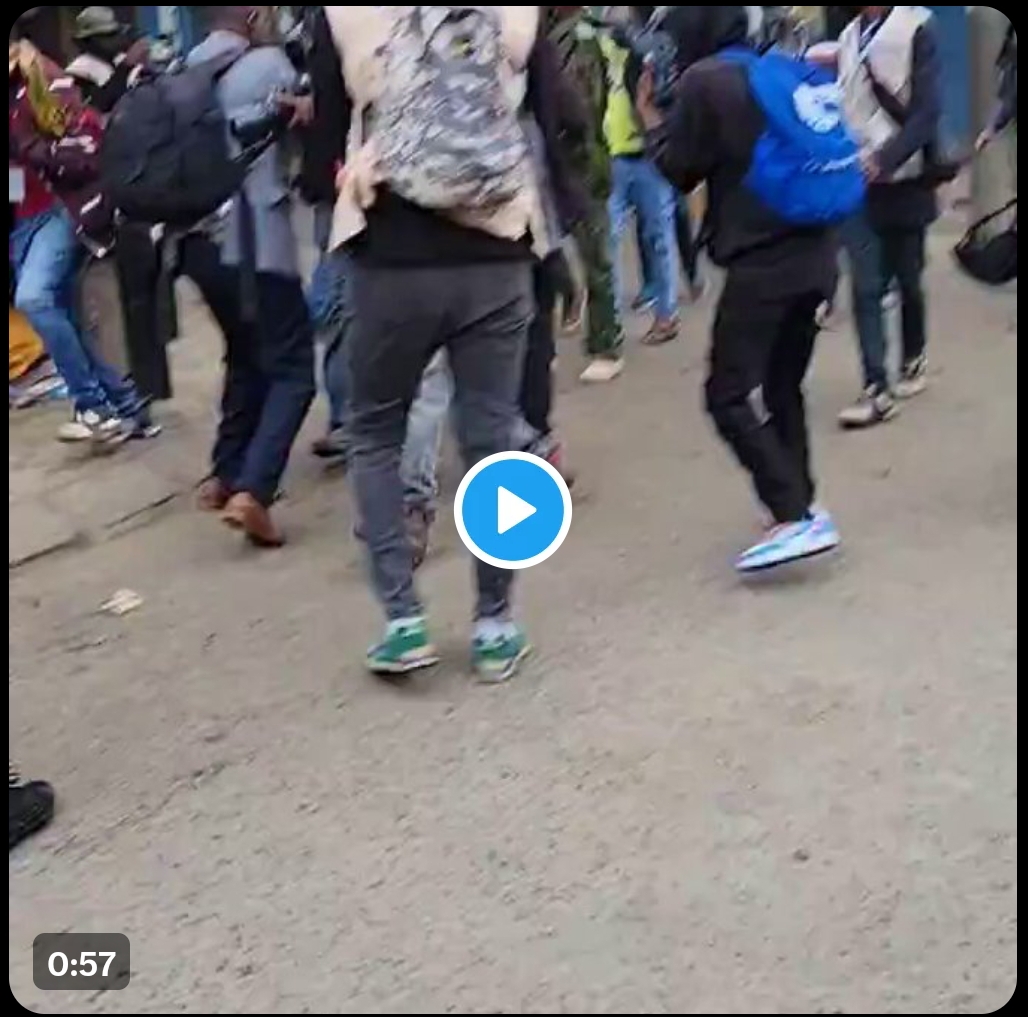
In the heart of Nairobi’s bustling Central Business District (CBD), tension escalates as plainclothes police officers move swiftly to arrest a protester.
The scene unfolds amidst the Nane Nane protests, an annual event that has taken on a new intensity this year.
Shoppers and office workers pause in their tracks, their eyes drawn to the sudden commotion.
The protester, a young man in his twenties, shouts slogans about freedom and justice as he is led away.
His voice, filled with a mix of defiance and fear, echoes through the crowded streets.
Onlookers, some supportive and others wary, pull out their phones to record the incident.
The atmosphere is charged, with murmurs of concern and anger spreading through the crowd.
Nearby, other protesters hold placards demanding government accountability and reforms.
They chant in unison, their voices rising above the city’s usual hum of activity.
The police presence is heavy, with officers strategically positioned to monitor and contain the demonstrations.
Despite the arrests, the protesters remain resolute, their determination evident in their steadfast march through the streets.
As the situation develops, journalists and media crews rush to cover the unfolding events.
Social media buzzes with live updates and videos, drawing national and international attention to the protests in Nairobi.
The Nane Nane demonstrations, traditionally focused on farmers’ rights, have grown to encompass broader issues of political and social justice, reflecting the deep-seated frustrations of many Kenyans.
The arrest of the young protester highlights the government’s struggle to balance maintaining order with respecting citizens’ rights to protest.
As the day progresses, all eyes remain on Nairobi, waiting to see how the authorities and protesters will navigate this critical moment in Kenya’s history.
