


Definition
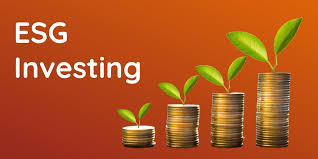
Environmental, Social, and Governance (ESG) investing is an investment approach where companies are evaluated not only on their financial performance but also on how they handle issues related to the environment, society, and governance.
In other words, investors look beyond profits and examine whether a business operates responsibly, treats people fairly, and is managed in a transparent and accountable way.
What Is ESG Investing?
ESG stands for Environmental, Social, and Governance. This method of investing focuses on how companies perform in these three areas before deciding whether they are worth investing in.
- Environmental (E): This involves how a company protects nature and reduces harm to the planet. It covers areas such as climate change policies, energy efficiency, waste management, pollution levels, use of natural resources, and treatment of animals. Investors may also look at greenhouse gas emissions, toxic waste management, and compliance with environmental laws.
- Social (S): This focuses on how a company manages relationships with people inside and outside its operations. It considers how employees are treated, workplace safety, diversity and inclusion, customer relations, community involvement, and contributions to social causes. For example, does the company encourage volunteer work, or does it donate part of its profits to local communities?
- Governance (G): Governance relates to the way a company is run. It includes leadership practices, executive pay, internal controls, accounting transparency, shareholder rights, and diversity in leadership roles. Investors want to see strong ethical standards, accountability, and assurance that companies avoid corruption, conflicts of interest, or political favoritism.
Key Takeaways
- ESG investing screens companies based on ethical, environmental, and social policies, encouraging businesses to act responsibly.
- Many investment platforms now offer products built on ESG principles, such as mutual funds and ETFs.
- ESG-focused portfolios help investors avoid companies involved in unethical, risky, or harmful practices.
How ESG Investing Works
ESG investing is often referred to by other names such as sustainable investing, responsible investing, impact investing, or socially responsible investing (SRI). Regardless of the label, the idea is to choose companies that act as good corporate citizens.
Investors analyze a wide range of behaviors and policies to ensure businesses respect the environment, value people, and are guided by transparent leadership. For example:
- Environmental factors may include renewable energy use, recycling programs, and pollution reduction.
- Social factors may involve fair wages, safe working conditions, and equal opportunities.
- Governance factors focus on fair executive compensation, accountability, and ethical decision-making.
Large institutional investors, such as pension funds, increasingly rely on ESG analysis to guide their investment choices. By late 2024, global sustainable funds had reached $3.2 trillion in assets under management (AUM), according to Morningstar. This shows how fast ESG investing is growing worldwide.
Today, brokerage firms, mutual fund companies, and even robo-advisors like Betterment and Wealthfront offer ESG-focused products, particularly appealing to younger, socially conscious investors.
ESG vs. SRI
Although ESG and SRI are often mentioned together, there are differences. Socially Responsible Investing (SRI) focuses on specific ethical or moral values such as diversity, human rights, or corporate ethics. ESG, on the other hand, is broader—it looks at overall environmental, social, and governance standards when assessing companies.
ESG Metrics and Evaluation
Investment firms such as Trillium Asset Management use ESG factors to evaluate companies that are likely to perform well in the long run. Analysts study the most relevant issues in each industry and sector to set these criteria.
Some positive signs they look for include:
- Use of renewable energy and reduced emissions.
- Fair wages for employees.
- Ethical supply chains.
- Transparent leadership and financial reporting.
- Diverse and inclusive boards of directors.
At the same time, Trillium avoids companies that generate over 5% of revenue from industries like coal mining, gambling, tobacco, weapons, or private prisons.
They also exclude businesses involved in major controversies such as human rights abuses, environmental damage, animal cruelty, or poor product safety standards.
ESG and Investors
As ESG becomes more important, many financial institutions such as JPMorgan Chase, Wells Fargo, and Goldman Sachs publish detailed annual ESG reports, showing how they incorporate these principles into business practices.
However, one challenge is determining whether ESG initiatives lead to genuine change or are simply “box-ticking exercises” for reputation purposes. The true impact depends on whether companies and investors adopt practical, measurable, and realistic ESG strategies.
It is also worth noting that avoiding certain industries—like tobacco or defense—can sometimes mean sacrificing higher returns.
Historically, these industries have performed strongly even during recessions. Still, many ESG investors are willing to accept lower returns if it means supporting businesses that align with their values.
For example, in a survey by Investopedia and Treehugger, nearly half of respondents said they would accept up to a 10% loss over five years if the company had outstanding ESG standards. At the same time, 74% admitted that valuation and price remain very important when making investment decisions.
What ESG Means for Businesses
When a company adopts ESG principles, it commits to running its business responsibly. This could mean reducing carbon emissions, minimizing pollution, supporting local communities, ensuring fair labor practices, building a diverse and inclusive workforce, and maintaining accountability at all levels of leadership.
In short, businesses that embrace ESG are showing they care about long-term impact, not just short-term profits.
ESG vs. Sustainability
ESG and sustainability are closely connected but not identical. ESG looks at how a company makes decisions and whether it acts responsibly in environmental, social, and governance matters.
Sustainability, meanwhile, focuses on the outcome of those decisions—how they affect the planet and society over time. In practice, ESG-driven actions often contribute to overall sustainability.
Identifying ESG Investments
For investors, knowing which companies meet ESG standards is crucial. Financial research firms provide ESG ratings and scores.
For instance, as of June 2024, MSCI rated more than 17,000 companies worldwide, assigning them scores and letter grades based on their ESG compliance. Similarly, Morningstar, Bloomberg, and other firms have also developed rating systems that measure how well companies follow ESG objectives.
The Bottom Line
ESG investing is about more than financial returns—it is about aligning investments with values. By focusing on environmental, social, and governance standards, investors support companies that are working toward positive change in society and the environment.
With demand for ESG-related products rising and assets in sustainable funds growing rapidly, ESG investing is expected to play an even bigger role in shaping the future of global markets.
Join Government Official WhatsApp Channel To Stay Updated On time
https://whatsapp.com/channel/0029VaWT5gSGufImU8R0DO30
