


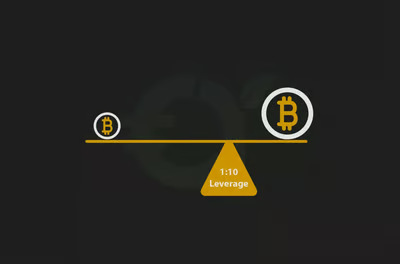
Advanced Leverage Strategies Using Crypto Loans
Crypto loans have become one of the most powerful tools for traders and investors who want to grow their portfolios without selling their digital assets. Unlike traditional finance, where taking a loan requires strict credit checks and paperwork, crypto loans are fast, flexible, and based on collateral. When used wisely, they can help traders increase their exposure to profitable positions, build passive income, or manage cash flow during market volatility.
However, leverage always comes with risk. So understanding how advanced strategies work is important before you take any crypto-backed loan.
Below are the most effective advanced leverage strategies using crypto loans and how they work.
1. Leveraged Long Position (Buying More Crypto Without Selling Your Assets)
This is the most common strategy. If you believe the market will rise, you can use your existing crypto to borrow stablecoins or more crypto, then use that loan to buy additional assets.
How it Works
- Deposit your crypto — for example, ETH — as collateral.
- Borrow stablecoins like USDT or USDC.
- Use the borrowed funds to buy more ETH.
- Hold both positions and profit when ETH price goes up.
Why Traders Use It
- You keep your original crypto (no selling).
- You increase exposure to potential profits.
- No tax event in countries where selling triggers tax.
Risk
If the price falls, your collateral loses value and you may face liquidation.
2. Leveraged Yield Farming (Boosting DeFi Rewards)
Yield farmers often use loans to multiply farming rewards across DeFi protocols.
How it Works
- Borrow tokens using your existing crypto.
- Deposit these borrowed tokens into a high-yield farming pool.
- Earn amplified rewards because your total deposit is larger.
Why It’s Powerful
- Rewards scale with the amount you stake.
- Ideal for stablecoin farms with lower volatility.
- Helps you maximize DeFi APYs without selling crypto.
Risk
Interest rates can change suddenly, reducing profitability.
3. Carry Trade Leverage (Borrow Low, Earn High)
This strategy works when the borrowing rate is lower than the earning rate.
How it Works
- Borrow stablecoins or crypto at a low interest rate.
- Deposit the borrowed funds into a protocol offering a higher APY.
- Pocket the difference as profit.
Example
Borrow USDC at 3% and farm it in a protocol offering 12%.
Your net gain becomes the rate difference, minus fees.
Risk
Lending protocols may change APYs or raise borrowing rates.
4. Leveraged Staking (Borrow to Buy and Stake)
Staking rewards for proof-of-stake (PoS) coins can be increased through borrowing.
How it Works
- Use ETH or another asset as collateral.
- Borrow more ETH.
- Stake both the original and borrowed ETH on staking platforms.
- Earn rewards on the doubled position.
Why Traders Choose It
- Staking rewards scale with the amount locked.
- Works well for long-term believers in assets like ETH, ADA, or SOL.
Risk
If the price drops sharply, staked assets may be locked during volatility, increasing liquidation risk.
5. Market-Neutral Leveraged Strategy (Hedged Profits)
This advanced method lets you profit from interest rates or market inefficiency without betting on price direction.
How it Works
- Use crypto as collateral to borrow another crypto.
- Short the borrowed crypto on an exchange.
- Earn from funding rates, arbitrage, or price gaps.
When It Works Best
- During high funding rate environments.
- When price differences exist between spot and futures markets.
Risk
Strategy complexity is high; poor execution can cause losses.
6. Leveraged Diversification (Borrowing to Build a Wider Portfolio)
Instead of selling one asset to buy another, you borrow against it and expand your holdings.
How it Works
- Deposit BTC as collateral.
- Borrow stablecoins or altcoins.
- Buy new crypto assets for diversification.
- Maintain your original BTC position.
Why It’s Useful
- Reduces exposure to a single coin.
- Helps long-term investors avoid selling their strongest assets.
- Maintains upside potential across multiple markets.
Risk
If your main collateral drops in value, your overall portfolio is still vulnerable.
7. Looping Leverage Strategy (High Risk, High Reward)
Looping is when you take a loan, use it to buy more of the same asset, then redeposit it as collateral. This process is repeated several times.
How it Works
- Deposit $1,000 ETH.
- Borrow $500 ETH worth of stablecoins.
- Buy more ETH and redeposit.
- Repeat multiple loops until the loan-to-value (LTV) limit is reached.
What You Gain
- Massive leveraged exposure to a single asset.
- High potential returns during bull runs.
Risk
Even small price drops can trigger liquidation because leverage becomes extremely high.
Important Risk Management Tips
Crypto loan leverage increases both profit and danger.
To protect your portfolio:
- Keep your LTV low (30–50% is safer).
- Always monitor market volatility.
- Avoid looping unless you’re highly experienced.
- Use stablecoins for safer strategies.
- Set alerts on your lending platform for liquidation thresholds.
Final Thoughts
Crypto loans provide powerful tools for traders who want to grow their holdings without selling their assets. With the right leverage strategies — from leveraged long positions to advanced hedging and yield farming — investors can unlock more opportunities in both bullish and sideways markets.
However, these strategies require careful risk management because liquidation can happen quickly in crypto.
Join Kenya Youths Forum Official WhatsApp Channel
https://whatsapp.com/channel/0029VaWT5gSGufImU8R0DO30
