


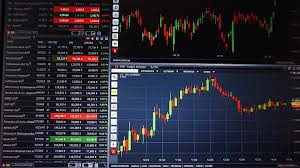
The simple answer is money — specifically, currencies from around the world.
Forex trading can seem a bit confusing at first because you’re not actually buying a physical item. So, let’s use a simple (though not perfect) comparison to help understand it better.
Imagine buying a currency like buying a share in a country. It’s similar to how you might buy shares in a company — you’re investing in that company’s future. In the same way, when you buy a country’s currency, you’re investing in the health and performance of that country’s economy.
The value of a currency usually reflects how strong or weak the market believes that country’s economy is — both now and in the future.
For example, when you buy Japanese yen (JPY), it’s like buying a “piece” of Japan’s economy. You’re basically making a bet that Japan’s economy is doing well, or will improve in the future. When you later sell the yen, hopefully at a higher exchange rate, you’ll make a profit from the trade.
So in simple terms, forex trading is all about buying one currency while selling another, based on your belief in how strong one economy is compared to another.
The price of a currency, or its exchange rate compared to other currencies, is usually influenced by factors like economic growth, interest rates, political stability, and market expectations. When you understand these factors well, you can make smarter decisions when trading currencies.
By the time you finish learning all the essentials of forex trading — like through this “School of Pipsology” — you’ll feel confident and ready to jump into the world of currency trading.
Major Currencies in Forex
There are many currencies available to trade in the forex market, but as a beginner, you’ll likely start by trading what are known as the major currencies.
What Are Major Currencies?
They’re called major because they are the most heavily traded currencies in the world, and they represent the strongest and largest global economies. These currencies are involved in most forex transactions every day.
Different traders might have slightly different ideas of what qualifies as a “major” currency. For example:
- Some traders — the very serious, rule-following types — only include the USD, EUR, JPY, GBP, and CHF in their list of major currencies.
- Others, like us more relaxed traders, also include the AUD, NZD, and CAD, even though they’re sometimes referred to as commodity currencies.
To keep it simple and beginner-friendly, we’ll just treat all eight of these as major currencies.
Here’s a breakdown of the major currencies, including their codes, countries, currency names, and some fun nicknames:
| Code | Country | Currency | Nickname |
|---|---|---|---|
| USD | United States | Dollar | Buck |
| EUR | Eurozone | Euro | Fiber |
| JPY | Japan | Yen | Yen |
| GBP | Great Britain | Pound | Cable |
| CHF | Switzerland | Franc | Swissy |
| CAD | Canada | Dollar | Loonie |
| AUD | Australia | Dollar | Aussie |
| NZD | New Zealand | Dollar | Kiwi |
Understanding Currency Codes
Every currency has a three-letter symbol. These are called ISO 4217 Currency Codes, which were introduced in 1973 by the International Organization for Standardization.
- The first two letters of the code usually refer to the country.
- The third letter typically represents the currency’s name.
For example:
- NZD = NZ (New Zealand) + D (Dollar)
This system makes it easy to identify and understand each currency at a glance.
A Quick Word on Nicknames
Currency traders love nicknames, especially when talking about the U.S. dollar. Aside from “buck”, there are many slang terms you might hear, like:
- Greenbacks
- Benjamins
- Bones
- Cheddar
- Loot
- Bread
- Dead presidents
- Cash money
- Paper
- Scrilla
- Moolah
And here’s a fun cultural twist: In Peru, the U.S. dollar is sometimes nicknamed “Coco” — a friendly nickname for Jorge (Spanish for George). That’s because George Washington appears on the $1 bill.
So instead of saying, “I’m heading to work,” a forex-savvy trader might say, “Yo, I gotta bounce! Time to go stack those benjis, son!”
Summary
In forex trading, you’re not buying goods — you’re trading currencies, and what you’re really doing is investing in the economic strength of a country.
The most common currencies traded are from the world’s strongest economies, and they all have codes and nicknames used by traders worldwide.
Understanding the basics — like which currencies are the majors and how to read their codes — is your first step toward becoming a successful forex trader.
Join Gen Z New WhatsApp Channel To Stay Updated On time https://whatsapp.com/channel/0029VaWT5gSGufImU8R0DO30
