


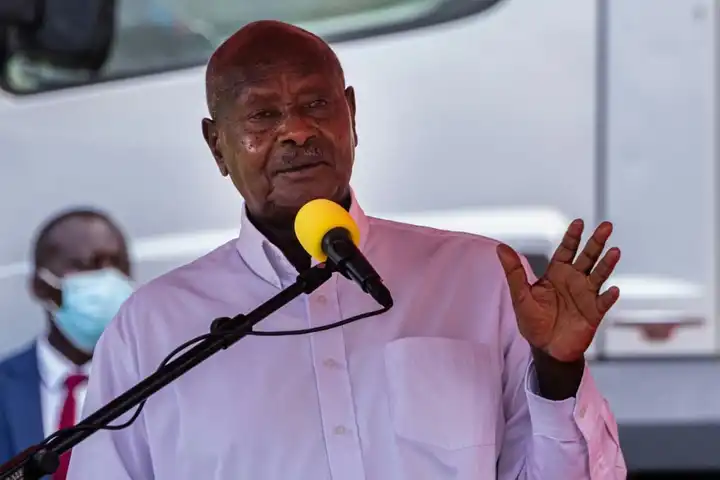
Uganda: Yoweri Museveni Says Government Should Control the Internet
Ugandan president Yoweri Museveni has once again sparked debate after insisting that the main internet infrastructure should be fully controlled by the government.
According to him, this would help keep data prices low and prevent private companies from creating monopolies that prioritise profits over the needs of citizens.
Museveni argued that when private businesses own essential internet systems, they mainly focus on making money.
This, he said, makes data bundles unnecessarily expensive for ordinary people. He believes that internet access has become such an important part of daily life that the government must take responsibility for protecting and managing the core network systems.
Why Museveni wants a government-owned internet backbone
Museveni clarified that he is not stopping private companies from offering commercial internet services. Instead, he wants the state to own and manage the transmission backbone—the main national internet pipeline—while telecom companies focus on selling their own services on top of it.
He explained it this way:
If private companies fully control the backbone, they will charge high prices because businesses naturally chase profit. But if the government owns it, people will get cheaper and more reliable internet.
To emphasise how important the internet has become, Museveni compared modern digital tools to the older methods used during his liberation struggle, saying technology has advanced so much that countries must now safeguard critical digital systems just like they protect physical infrastructure.
Mixed reactions from Ugandans
His comments drew a wide range of reactions online. Some people supported the idea, saying a government-owned option could force private companies to lower their prices.
Others strongly opposed the plan, fearing it could give the state even more control over internet shutdowns, especially during elections.
Here are some reactions from social media users:
- Peter Musembi: “He wants it so he can switch it off during elections.”
- Ochom Fredrick: “It’s a good idea to have both government and private internet. If private internet gets too costly, people can choose the government option.”
- Isa Mecha: “Governments in East Africa are selling state corporations, but now they want to control the internet?”
- Stephen Makinda: “He simply wants the power to shut down the internet on voting day. We know these politicians.”
Will internet prices drop in Uganda?
Museveni insisted that his goal is to reduce the cost of data nationwide. He said that the government has already been expanding the national internet network by laying thousands of kilometres of fibre optic cable.
Phase V of the National Backbone Infrastructure project is currently underway, aimed at improving high-speed internet access across the country.
He explained that once the government backbone is strong enough, telecoms that charge too much will lose customers because people will shift to the cheaper government option.
Museveni also linked his push for better digital connectivity to his 2026 re-election campaign, saying affordable internet is a key part of Uganda’s development.
Museveni’s earlier comments about the Indian Ocean and the moon
This latest statement comes soon after another controversial remark, where Museveni claimed that the Indian Ocean also belongs to Uganda, arguing that future conflicts might arise over access to the sea and the port of Mombasa.
A few days later, he changed his tone again and said that space — including the moon — belongs to every country, Uganda included, because no single nation can claim such universal territory.
Join Gen z Official WhatsApp Channel to share your thoughts and stay updated on time
https://whatsapp.com/channel/0029VaWT5gSGufImU8R0DO30
