


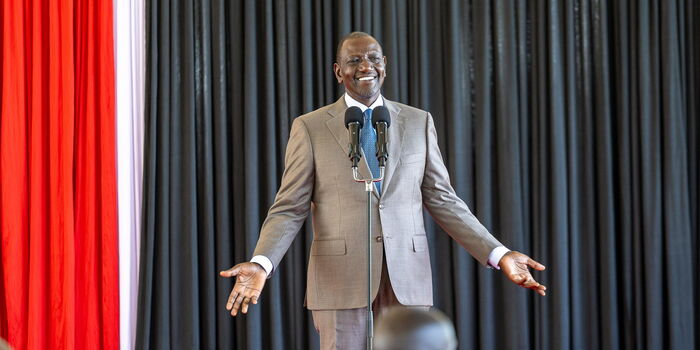
Ruto Opens Up on Challenges Facing His Government and How He Plans to Fix Them
President William Ruto has acknowledged that his administration is facing several serious challenges that are slowing down service delivery to the people.
According to a statement from the President’s office, some of the key issues include financial risks caused by budget deficits and a lack of funding for important development partner-supported programmes.
Additionally, weak systems for monitoring and evaluating government projects, as well as poor discipline in executing those projects, have also been identified as major obstacles.
In total, the President highlighted ten key structural problems that are making it difficult for his administration to fully implement the promises outlined in his manifesto.
These problems range from poor coordination between different levels of government to challenges such as lawsuits, legal complications, slow bureaucratic processes, and a general lack of teamwork in carrying out government plans.
Other broader issues mentioned include global geopolitical shifts, international conflicts, environmental disasters, fast-changing technology, cyber threats, the spread of fake news, and the growing trend of turning valid public concerns into violent protests.
All of these are creating an environment that complicates the government’s ability to effectively serve Kenyans.
To address these wide-ranging challenges, President Ruto announced a set of 20 detailed measures meant to strengthen government performance and build greater trust among citizens.
Among these is a renewed focus on improving cooperation between different arms and levels of government, both vertically and horizontally.
The President also wants to train more Kenyan youth in multiple international languages to boost their chances of securing jobs abroad and becoming competitive on the global stage.
Another proposed strategy is to rethink Kenya’s long-term economic growth plans, focusing on creating more jobs through better coordination across all government departments.
Ruto also emphasized the need to improve special economic zones and search for new international markets to promote and sell Kenyan-made products.
In terms of international relations, the President pointed out the need to strengthen partnerships with foreign governments and international organisations that align with Kenya’s development goals.
He also stressed the importance of protecting the rights and welfare of Kenyans living in areas affected by conflict or instability.
Agriculture, a key sector for the country’s economy, is also a priority area. Ruto’s administration plans to improve the quality and availability of data across all agricultural sectors to enable better and more informed policy-making.
The goal is to increase food production, raise farmers’ incomes, and create more jobs along the agricultural value chain. One major focus will be to help farmers sell their produce more quickly so that they can earn money faster.
The education sector will also receive significant attention. The government plans to fix the current imbalance between the number of teachers and students by speeding up the hiring of more teachers. This will be especially important for successfully rolling out the Competency-Based Education and Training (CBET) system.
Besides hiring more staff, the government will also invest in upgrading school infrastructure, such as building modern science labs and other essential facilities to improve learning conditions across the country.
At the university level, the government’s new funding approach will be refined to ensure that the system used to assess students’ financial needs is more accurate.
This will help place students into the correct funding categories so that no one is left behind due to poor financial evaluations.
When it comes to healthcare, Ruto reiterated his government’s strong commitment to achieving universal healthcare coverage. A central part of this effort is registering every Kenyan, along with their dependents, into the national Social Health Insurance scheme.
This move will be supported by the purchase and distribution of modern medical equipment through coordinated financing plans between counties and suppliers.
In addition, the government is determined to complete long-awaited reforms at the Kenya Medical Supplies Agency (KEMSA). These reforms are being carried out according to a framework that has already been agreed upon by both the national and county governments.
The digitisation of public services is another key focus area. President Ruto announced that all government Ministries, Departments, and Agencies will be required to integrate their services into the e-Citizen platform.
This move is expected to increase efficiency, reduce opportunities for corruption, and generate more revenue for the government.
Looking beyond the core sectors, the administration is also concentrating on improving the overall economy and raising the standard of living for Kenyans. For example, Micro, Small, and Medium Enterprises (MSMEs) will be given better access to affordable financing through the Hustler Fund initiative.
The government also plans to expand the Affordable Housing Programme, which is not only aimed at providing homes but also at boosting job creation in the construction sector and its related industries.
Finally, to support Kenyan workers seeking jobs abroad, the government will enhance the coordination of international labour migration. This will be done by signing new Bilateral Labour Agreements and reviewing existing ones to ensure more skilled and professional Kenyans can work in foreign markets under better conditions.
Through these wide-ranging reforms and action plans, President Ruto aims to restore efficiency, deepen citizen trust, and fulfill the development promises made to the people of Kenya.
Join Gen Z New WhatsApp Channel #JusticeforAlbertOjwang To Stay Updated On time
https://whatsapp.com/channel/0029VaWT5gSGufImU8R0DO30
