


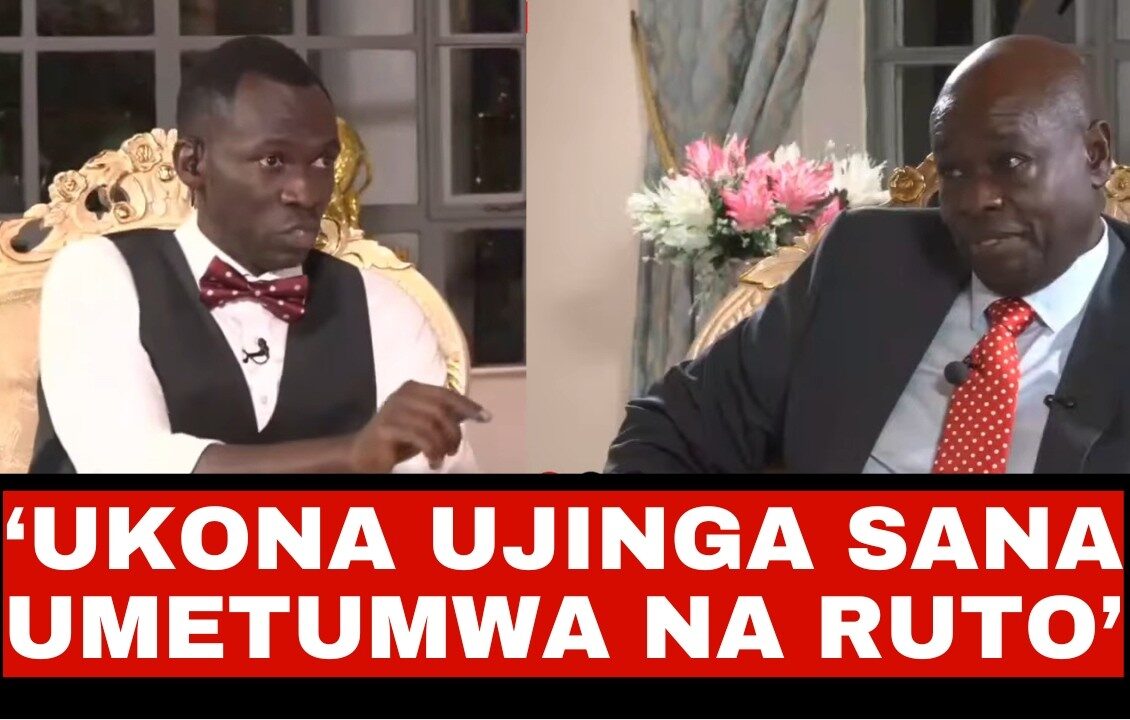
Gachagua Erupts During Live Interview, Clashes With Trevor Ombija
A tense and dramatic moment unfolded on live television when Rigathi Gachagua clashed with seasoned journalist Trevor Ombija, threatening to walk out of the interview after being asked tough questions.
The heated exchange, which has since gone viral across social media platforms in Kenya, captured a rare moment of open confrontation between a top political figure and a journalist during a prime-time broadcast.
Heated Exchange on Live TV
The interview started on a calm note, with Ombija seeking to address key political issues and recent remarks made by Gachagua. However, things quickly escalated when the journalist pressed further on sensitive topics, demanding clarity and accountability.
Gachagua, visibly irritated by the direction of the questions, pushed back strongly. As the tension grew, he accused Ombija of asking what he described as “stupid questions,” a remark that immediately changed the tone of the conversation.
In a moment that stunned viewers, Gachagua issued a direct warning:
“I will walk out of this interview, don’t ask me stupid questions.”
The statement created an awkward atmosphere in the studio, as the confrontation exposed the fragile balance between political leaders and the media when hard questions are asked in real time.
Journalist Holds His Ground
Despite the sharp response, Ombija maintained his composure and did not immediately retreat from his line of questioning. Known for his firm and direct interviewing style, the journalist continued to seek answers on matters of public interest.
His approach reflected the role of the media in holding leaders accountable, even when conversations become uncomfortable. The exchange highlighted the challenges journalists often face when dealing with high-profile political figures who may resist scrutiny.
Growing Tension Between Leaders and the Media
This incident comes at a time when relations between some Kenyan politicians and the media appear increasingly strained. Public interviews have become more confrontational, especially when leaders are questioned about controversial statements, governance issues, or political strategy.
Gachagua has in recent months remained a dominant and outspoken figure in national politics, often attracting both support and criticism. His strong communication style has earned him a loyal base, but it has also placed him at the center of several public debates.
Moments like this interview clash reveal a broader issue—whether political leaders are fully prepared to face tough, direct questions from journalists, and how far journalists should go in pressing for answers.
Mixed Reactions From Kenyans
Following the viral clip, Kenyans took to social media to express divided opinions on the confrontation.
Some viewers defended Ombija, arguing that journalists have a duty to ask difficult questions on behalf of the public. They noted that leaders must be ready to explain their actions and statements without becoming hostile.
Others supported Gachagua, saying that some interview questions can be framed in a way that feels disrespectful or intentionally provocative. To them, his reaction was a sign of frustration with what they see as biased or unfair media coverage.
A section of Kenyans, however, viewed the incident as unfortunate, saying it undermines meaningful dialogue between leaders and the press at a time when the country needs constructive engagement.
A Reflection of Kenya’s Political Climate
The clash between Rigathi Gachagua and Trevor Ombija goes beyond a single interview. It reflects the current state of political communication in Kenya, where tensions often run high and public discourse is becoming increasingly polarized.
As leaders continue to engage with the media, such moments are likely to remain part of the national conversation. They raise important questions about respect, accountability, and the role of journalism in a democratic society.
Conclusion
The explosive interview serves as a reminder of the power of live television and the unpredictability that comes with it. While it has sparked debate across the country, it also highlights the need for balance—where journalists can ask tough questions, and leaders can respond without confrontation.
As Kenya’s political landscape continues to evolve, the relationship between the media and those in power will remain a critical pillar in shaping public opinion and ensuring transparency.
Join Kenya Govt Official WhatsApp Channel to stay updated on time
https://whatsapp.com/channel/0029VaWT5gSGufImU8R0DO30
