


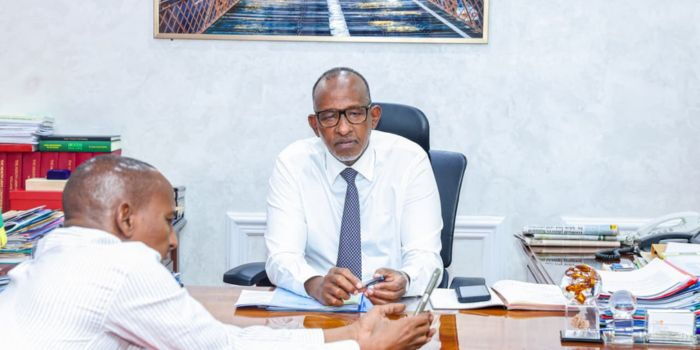
Duale Unveils New SHA Emergency Fund to Give Kenyans Free 24-Hour Critical Care
Kenyans could soon begin enjoying free emergency treatment for the first 24 hours under the Social Health Authority (SHA), following the latest reforms announced by Health Cabinet Secretary Aden Duale.
The new support will be provided through the SHA Emergency, Chronic and Critical Illness Fund, a move expected to make urgent healthcare faster and more accessible for people across the country.
Duale made the announcement on Thursday, April 2, during the onboarding ceremony of the National Police Service and the Kenya Prisons Service into the Public Officers Medical Scheme Fund at Avenue Hospital in Nairobi.
During the event, he revealed that the government is now in the final stages of introducing a nationwide ambulance dispatch system, which is expected to officially roll out by June.
Under the new arrangement, any Kenyan facing a medical emergency will be able to make a call to a central dispatch centre from any part of the country.
Once the call is received, the system will identify the nearest available ambulance and immediately send it to the patient’s location.
Whether the person is at home, at work, on the road, or in any public place, the ambulance will transport them to the nearest hospital for urgent medical attention.
According to Duale, this new emergency response system is designed to remove the delays that many Kenyans face when trying to access life-saving care.
He explained that once the patient arrives at the hospital, they will be admitted immediately and doctors will begin all necessary procedures without asking for payment upfront.
This may include emergency surgery, scans, medication, intensive care support, and any other urgent medical intervention required within the first day.
The Health CS emphasized that SHA will fully pay all costs incurred during the first 24 hours, including the ambulance charges and hospital treatment expenses.
This means patients and their families will no longer need to worry about raising deposits or transport fees before receiving emergency care, which has often been a major challenge in life-threatening situations.
He described the move as part of the government’s broader health transformation agenda, saying it is aimed at ensuring no Kenyan loses their life simply because they could not afford emergency services in time.
The reform is also expected to ease pressure on families who are often forced to make urgent financial decisions during medical crises.
Another key benefit of the plan is that hospitals will now be required to admit emergency patients without demanding a deposit.
This is expected to eliminate one of the biggest barriers that has historically prevented many people from receiving timely treatment, especially after road accidents, sudden illnesses, or serious injuries.
SHA Chief Executive Officer Mercy Mwangangi had earlier spoken about the same initiative in September 2025, noting that President William Ruto was expected to launch the service before the end of that month.
Her earlier remarks had already signaled the government’s intention to strengthen emergency healthcare response systems countrywide.
At the time, Mwangangi explained how ambulance providers would be reimbursed under the plan. She said SHA would pay Ksh4,500 for emergency evacuations covering distances of up to 25 kilometres.
For patients located further away, the authority would add Ksh75 for every extra kilometre, ensuring that providers are fairly compensated while keeping the service free for patients.
The Emergency, Chronic and Critical Illness Fund has been designed to support quick medical intervention for severe and life-threatening cases in all parts of Kenya.
Officials believe the fund will play a major role in improving survival rates during emergencies by ensuring that treatment begins as quickly as possible.
Duale expressed confidence that the system will greatly improve emergency response times and make quality urgent healthcare more accessible to wananchi, especially those in areas where delays have previously cost lives.
Interior Cabinet Secretary Kipchumba Murkomen also echoed the importance of the new plan during his speech.
He said many Kenyans are still unaware that emergency treatment is already guaranteed under the law and urged the public to understand their rights.
Murkomen noted that whether a person is involved in a road accident, suffers a sudden illness, or faces any other life-threatening condition, they should be able to walk into any hospital in Kenya and receive immediate treatment for the first 24 hours at no cost under SHA.
The latest announcement is likely to be welcomed by many Kenyans, as it promises to reduce the financial burden on families during emergencies while also strengthening the country’s healthcare response system.
If fully implemented as planned by June, the new ambulance dispatch and 24-hour free treatment programme could mark one of the biggest changes in Kenya’s emergency healthcare system in recent years.
Join Kenya Govt Official WhatsApp Channel to stay updated on time
https://whatsapp.com/channel/0029VaWT5gSGufImU8R0DO30
