


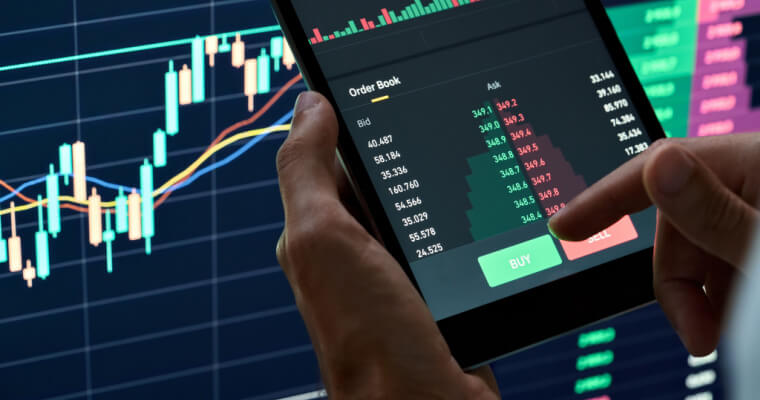
Margin trading is a powerful investing strategy that allows traders to borrow money from a broker to buy more investments than they could afford with their own cash alone.
In simple terms, it is like taking a loan from your brokerage firm and using your existing cash or investments as security for that loan.
This borrowed money increases your buying power, which can lead to larger profits when the market moves in your favor. However, it can also increase losses just as quickly when prices move against you.
Because of this balance between higher opportunity and higher danger, margin trading is often used by experienced traders who understand short-term market movements and risk management.
What Margin Means in Trading
In investing, margin refers to the amount of money an investor borrows from a broker to purchase securities such as stocks, ETFs, or other approved financial products.
The investor first deposits their own money into a margin account, and this deposit acts as collateral. The broker then lends additional funds based on the value of that collateral.
This setup allows you to control a larger position than your own cash would normally allow. For example, instead of buying shares worth only $5,000 with your own money, margin may allow you to control $10,000 worth of shares.
The major attraction here is leverage. Leverage means using borrowed money to increase exposure to the market. If the asset price rises, profits can be much larger than they would be in a normal cash account.
But if the price falls, the losses are also magnified, and in some cases, traders may lose more than the money they originally deposited.
How Margin Trading Works
Margin trading starts with opening a special brokerage account known as a margin account. This is different from a regular cash account because the broker gives you access to borrowed funds.
When you buy securities using margin, the cash or investments already in your account become collateral for the loan. The broker charges interest on the borrowed amount, and this interest continues to build until the loan is fully repaid.
This means margin trading has an extra cost beyond normal trading fees. Even if your investment stays flat or moves slowly, the interest keeps increasing your cost basis. That is why margin is usually better suited for short-term trades where price movements are expected to happen quickly.
For example, if your broker requires an initial margin of 50% and you want to buy securities worth $20,000, you only need to provide $10,000 of your own money. The remaining $10,000 is borrowed from the broker.
A Simple Example of Margin in Action
Imagine you deposit $10,000 into your margin account.
With a 50% margin requirement, your buying power becomes $20,000. This means you can buy stocks worth double your deposit.
If the stock rises by 10%, your total investment becomes $22,000. After repaying the broker’s $10,000 loan, you are left with $12,000, giving you a profit of $2,000. Without margin, the same 10% move would have earned you only $1,000.
But the reverse is also true.
If the stock drops by 10%, the investment falls to $18,000. After paying back the $10,000 loan, your remaining equity becomes $8,000. That means you lost $2,000 instead of $1,000.
This clearly shows how margin doubles both gains and losses.
Step-by-Step Process of Buying on Margin
Buying on margin follows a straightforward process.
First, you open a margin account and deposit the minimum amount required by your broker. In many cases, this starts at around $2,000, though some brokers may require more.
Second, the broker gives you access to leverage based on the rules of the account. In many markets, investors can borrow up to 50% of the value of marginable securities.
Third, you use the borrowed money together with your own funds to buy more shares than you normally could.
Fourth, the broker charges interest on the borrowed amount daily or monthly depending on the platform.
Finally, when you sell the securities, the proceeds first go toward repaying the margin loan. Whatever remains after repayment belongs to you.
This process sounds simple, but the risks become serious when the market turns against your position.
Key Parts of Margin Trading You Must Understand
Minimum Margin
The minimum margin is the smallest amount you must deposit before a broker allows you to trade on margin. This amount is often set by regulations and brokerage policies.
Many brokers require at least $2,000 to activate a margin account, though some premium brokers may ask for more depending on the products you want to trade.
Initial Margin
Initial margin is the percentage of the total trade value you must fund with your own money.
A common rule is 50%, which means if you want to buy shares worth $10,000, you need to contribute $5,000 while the broker lends the rest.
This is the amount that creates your leverage.
Maintenance Margin
Maintenance margin is the minimum amount of equity you must continue to keep in the account after opening the trade.
As market prices move, the value of your holdings changes. If losses reduce your account equity below the maintenance requirement, the broker may step in.
This is where one of the biggest risks in margin trading appears.
What Is a Margin Call?
A margin call happens when the value of your account falls below the required maintenance margin level.
When this happens, the broker asks you to deposit more money or add more securities to restore the account balance.
If you do not respond quickly, the broker can automatically sell some or all of your investments without asking for your permission. This forced selling is known as liquidation.
Margin calls are dangerous because they often happen during fast market drops, meaning your positions may be sold at very poor prices.
This can lock in losses that may have otherwise recovered if the market later bounced back.
Why Margin Trading Is Considered Risky
The main risk of margin trading is that losses can exceed your initial deposit.
In a regular cash account, the most you can lose is the money you invested. But with margin, because you are using borrowed funds, you may owe the broker additional money if the market falls sharply.
Another major risk is the interest cost.
The longer you keep a margin trade open, the more interest accumulates. Over time, this can eat deeply into profits and make it harder for the trade to break even.
This is why many traders prefer using margin for short-term opportunities rather than long-term investing.
Sudden volatility can also trigger automatic liquidations, leaving traders with little control over when positions are closed.
Advantages of Margin Trading
Margin trading offers several benefits when used correctly.
One major advantage is increased buying power. Traders can control larger positions without needing all the capital upfront.
It also creates the potential for higher profits because gains are calculated on the full position size, not just your personal deposit.
Another benefit is flexibility. Unlike many traditional loans, margin loans usually do not require fixed monthly repayments. The loan remains active until the securities are sold or the borrowed funds are repaid.
Margin can also create compounding opportunities. If the value of your collateral rises, brokers may extend more borrowing power, allowing advanced traders to scale positions further.
Disadvantages of Margin Trading
Despite the benefits, the downsides are equally significant.
The biggest disadvantage is amplified losses. A small market decline can create a much larger percentage loss on your own capital.
Interest charges are another disadvantage. These costs continue whether your trade wins or loses.
Margin calls can be stressful and may force you to add emergency funds during unfavorable market conditions.
Forced liquidations are perhaps the worst outcome because they remove your control and can close positions at a heavy loss.
Because of these risks, margin trading is not suitable for every investor.
Important Things Margin Traders Should Consider
Not every stock or ETF can be bought on margin.
Brokers and regulators decide which securities are marginable based on factors like liquidity, volatility, and risk level. Highly speculative stocks, penny stocks, and many newly listed IPOs are often excluded.
Some assets, such as cryptocurrency, may also have stricter margin rules or may not be allowed at all depending on the platform.
Before using leverage, traders should always understand the broker’s rules, interest rates, maintenance requirements, and liquidation policies.
It is also wise to keep extra cash in reserve in case a margin call happens.
Margin Beyond Trading
The word margin is also used in other financial areas.
In business, margin often refers to profit margin, which is the difference between revenue and expenses. This helps businesses measure how much profit they keep from sales.
In mortgage lending, margin refers to the extra percentage a lender adds to a benchmark interest rate, especially in adjustable-rate mortgages. For example, if the benchmark rate is 6% and the lender adds a 4% margin, the total mortgage rate becomes 10%.
So while the meaning changes slightly depending on the industry, margin generally refers to an added amount, difference, or borrowed buffer.
Margin Trading Explained Like You’re Five
Think of margin trading like buying a bigger bicycle using some of your own money and borrowing the rest from a friend.
If the bicycle becomes more valuable and you sell it, you make a bigger profit because you owned a larger item.
But if the bicycle loses value, you still must pay your friend back the full borrowed amount.
That means borrowing helped you buy something bigger, but it also increased your risk.
That is exactly how margin works in investing.
Final Thoughts
Margin trading can be a powerful way to increase profits because it gives traders more buying power through borrowed funds. It is especially attractive in fast-moving markets where short-term opportunities appear.
However, the same leverage that increases profits can also magnify losses, interest costs, and the risk of forced liquidation.
For this reason, margin trading should be approached carefully, with a clear strategy, proper risk management, and a full understanding of how margin calls work.
Used wisely, it can be a valuable tool. Used carelessly, it can quickly turn small market movements into significant financial losses.
Join Kenya Govt Official WhatsApp Channel to stay updated on time
https://whatsapp.com/channel/0029VaWT5gSGufImU8R0DO30
