


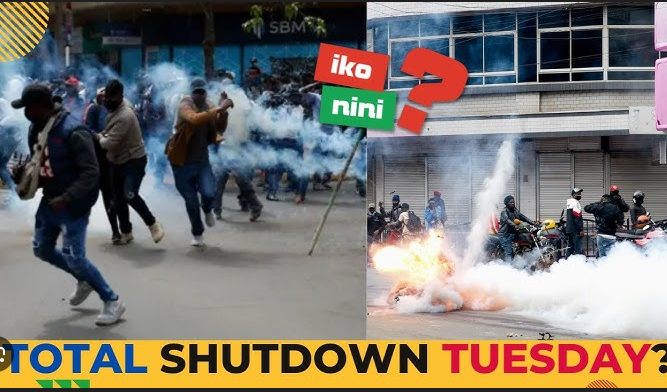
Nairobi woke up to tension and uncertainty on Tuesday morning as planned maandamano protests began building up in the Central Business District (CBD), with reports linking opposition leaders Edwin Sifuna and Deputy President Rigathi Gachagua to the unfolding demonstrations.
The protests, largely driven by Gen Z activists, have been fueled by growing frustration over the high cost of living, especially the continued rise in fuel prices.
Online mobilisation gained momentum overnight, with young Kenyans vowing to take to the streets despite warnings from authorities.
Situation on the Ground
By early morning, sections of the Nairobi CBD were already experiencing disruption. Some businesses delayed opening, while others remained closed altogether amid fears of looting or clashes.
Heavy police presence was reported in key areas, with officers deployed to control crowds and prevent protesters from accessing sensitive zones.
Commuters faced delays as public transport operators adjusted routes to avoid the CBD. In some areas, small groups of protesters were seen gathering, chanting slogans and calling for economic relief.
Political Signals and Tensions
Rigathi Gachagua has publicly called for peaceful demonstrations, urging security agencies to avoid the use of excessive force. His remarks have been interpreted by many as indirect support for citizens demanding accountability and economic relief.
On the other hand, Edwin Sifuna and other opposition figures have been associated with the broader mobilisation efforts. Their involvement signals a shift from purely youth-led protests to a more politically backed movement, raising the stakes of the demonstrations.
Police Warning and Legal Standpoint
Authorities have maintained that the protests are unauthorised, citing lack of formal notification as required by law. Police have warned that they will disperse unlawful gatherings and take action against those who violate public order.
Despite this, protesters insist that the Constitution guarantees their right to peaceful assembly, setting the stage for a possible confrontation between demonstrators and security forces.
Why Kenyans Are Protesting
At the heart of the protests is a deepening economic crisis affecting ordinary citizens. Many Kenyans say the cost of living has become unbearable, with fuel prices pushing up transport fares and the cost of basic goods.
Young people, in particular, have expressed frustration over limited economic opportunities and rising daily expenses. The maandamano is being seen as a voice of economic distress, rather than just a political protest.
What to Expect
As the day progresses, the situation remains fluid and unpredictable. There are concerns about:
- Possible clashes between police and protesters
- Road closures within and around the CBD
- Disruptions to businesses and transport
Security agencies remain on high alert, while organisers continue to push for larger turnout throughout the day.
Developing Story
This remains a breaking news situation, with events changing rapidly on the ground. Kenyans are advised to stay alert, avoid unnecessary movement into the CBD, and follow official updates.
More updates to follow as the situation unfolds.
Join TUKO KADI Official WhatsApp Channel to stay updated on time
https://whatsapp.com/channel/0029VaWT5gSGufImU8R0DO30
