


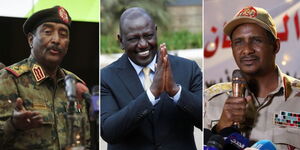
Kenya has joined other global and regional leaders in calling for an urgent ceasefire in Sudan, as the devastating conflict enters its third year. The renewed appeal was made during a high-level conference held in Berlin, Germany, where key international organisations and countries discussed ways to help end the war and restore peace.
In a joint statement released on Thursday, April 30, representatives from the African Union, European Union, United Nations, Intergovernmental Authority on Development, together with nations such as Kenya and Ethiopia, agreed that the crisis in Sudan cannot be solved through military force.
They stressed that dialogue and political cooperation remain the only realistic path toward lasting stability.
The leaders strongly urged all sides involved in the fighting to immediately accept a humanitarian truce. According to the statement, this temporary pause in hostilities would allow relief agencies to deliver food, medicine, and emergency support to millions of civilians trapped by violence.
They added that the humanitarian pause should then lead to a long-term ceasefire and serious political negotiations.
The statement explained that Sudan needs an independent, transparent, and inclusive civilian-led process that would guide the country toward peace, rebuild state institutions, and restore democratic civilian rule. Leaders said this transition is necessary if Sudan is to recover from years of unrest and armed conflict.
Participants at the Berlin talks also reaffirmed their respect for Sudan’s sovereignty, national unity, and territorial integrity. They emphasized that the country’s future should be decided by its own people through peaceful and lawful means, without outside interference.
At the same time, the conference strongly criticised any foreign involvement that continues to fuel the conflict. Leaders demanded an end to all forms of outside assistance, including financial aid, weapons supplies, military backing, or logistical support that allows either side to continue fighting.
They warned that any direct or indirect support coming from external actors only worsens the humanitarian crisis and delays peace efforts. The statement called on all countries and groups involved to stop actions that contribute to further violence in Sudan.
The leaders also pressed for immediate, safe, and unrestricted humanitarian access across the country. They said aid agencies must be allowed to reach affected communities both through border crossings and across frontlines, in accordance with international humanitarian law and existing UN resolutions.
Strong condemnation was also directed at attacks on civilian infrastructure. Leaders said hospitals, schools, markets, places of worship, diplomatic offices, and humanitarian centres must never be targeted under any circumstances.
They described such attacks as unacceptable and harmful to innocent civilians already suffering from the war.
Special attention was given to the protection of civilians, especially women and girls, who face increased risks of abuse, exploitation, and gender-based violence during the conflict.
The statement also called for people fleeing danger to be allowed safe movement so they can seek protection or humanitarian support.
The latest diplomatic push comes as Sudan’s war passes the three-year mark, leaving widespread destruction, displacement, and instability across the country.
During this period, Kenya has faced criticism over claims that it has offered shelter to some military leaders and provided support to one of the armed factions involved in the conflict.
Although William Ruto has publicly supported peace talks through IGAD, various investigations have linked Kenya to alleged arms transfers and political support for the Rapid Support Forces. These allegations have created tension between Nairobi and Sudan’s official military leadership.
Kenya also hosted a meeting in which leaders from the Rapid Support Forces signed a charter aimed at creating a parallel government. This move angered the Sudanese Armed Forces-led administration, which reportedly described Kenya as a rogue state.
In addition, Kenya has been accused of issuing travel documents and passports to some RSF officials, allowing them to move internationally despite sanctions placed on them. These accusations continue to raise diplomatic concerns as regional leaders push for peace in Sudan.
Join TUKO KADI Official WhatsApp Channel to stay updated on time
https://whatsapp.com/channel/0029VaWT5gSGufImU8R0DO30
