


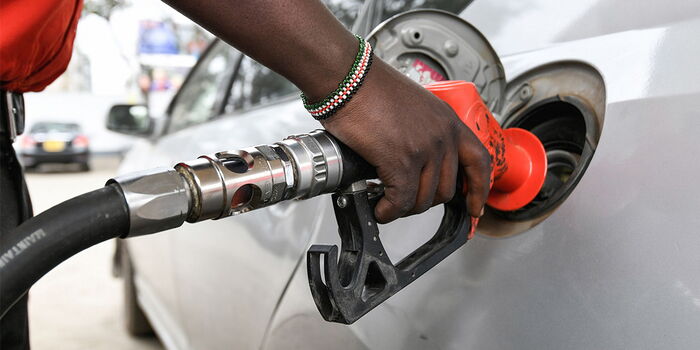
EPRA Explains Why Lower Global Oil Prices Have Not Yet Reduced Fuel Prices in Kenya
The Energy and Petroleum Regulatory Authority (EPRA) has explained why Kenyan motorists have not yet benefited from the recent decline in global oil prices, saying it will take between 30 and 45 days before any changes are reflected at local fuel stations.
Speaking during an interview, EPRA’s Petroleum and Gas Director, Edward Kinyua, said fuel prices in Kenya are influenced by events taking place around the world, especially geopolitical conflicts.
He pointed to the recent tensions in the Middle East, which caused a sharp rise in international oil prices and disrupted fuel supply chains across many countries.
According to Kinyua, the conflict pushed the cost of fuel to unusually high levels before global prices started falling again after a ceasefire was reached.
He explained that before the crisis, the Free on Board (FOB) price of super petrol stood at around 686 dollars per tonne. However, during the height of the conflict, the price rose significantly to 1,061 dollars per tonne.
Diesel experienced an even bigger increase during the same period. Its FOB price climbed from 637 dollars per tonne to 1,383 dollars per tonne, while kerosene rose from 681 dollars per tonne to 1,500 dollars per tonne as global markets reacted to the instability in the region.
Kinyua noted that fuel pricing is closely linked to global political developments, and major conflicts often lead to uncertainty in international oil markets.
He described the recent Middle East crisis as one of the most serious disruptions in recent times but welcomed the fact that a truce has now helped ease pressure on global oil prices.
“The supply and pricing of fuel is highly dependent on the geopolitical environment. This was one of the worst crises. But I am happy to note that there is a truce and the global oil prices are dropping,” Kinyua said.
Despite the drop in international crude oil prices, he emphasized that Kenyan consumers should not expect an immediate reduction in pump prices because fuel purchased today is not the same fuel currently being sold at filling stations.
Kinyua explained that once crude oil is bought on the international market, it must first undergo refining before being transported to Kenya.
The process also includes ordering the fuel, loading it onto ships, transporting it across the sea, unloading it at the Port of Mombasa, and distributing it across the country. This entire supply chain takes between 30 and 45 days.
Because of this timeline, the fuel currently available at Kenyan petrol stations was purchased several weeks ago when international prices were still higher.
As a result, any savings from the recent decline in global oil prices will only be seen after the newer, lower-priced fuel shipments arrive in the country.
“The international oil prices have dropped, but remember that the barrel has to go into a refining process and then the logistics of ordering, loading, voyage and discharging,” Kinyua explained.
He added that the fuel now being sold in Kenya was ordered about a month ago, which is why current pump prices have not yet changed despite improvements in the global market.
Kinyua also responded to concerns raised by members of the public over the government’s recent decision to temporarily ease fuel quality standards.
He said the move was necessary because the Middle East conflict disrupted normal fuel supply routes, forcing Kenya to seek alternative sources.
He explained that Kenya has consistently improved the quality of fuel used in the country over the years by reducing sulphur content, which helps lower air pollution and protects both the environment and vehicle engines.
According to Kinyua, before 2015, fuel sold in Kenya contained 500 parts per million (ppm) of sulphur. The country later reduced the limit to 50 ppm, marking a major improvement in fuel quality.
In August last year, Kenya introduced an even stricter standard, lowering the sulphur limit further to 10 ppm to meet cleaner environmental requirements.
He noted that Kenya had successfully used the 50 ppm standard for nearly ten years before adopting the cleaner 10 ppm fuel, which has become the country’s preferred quality standard.
However, the recent supply disruptions caused by the closure of the Strait of Hormuz, one of the world’s busiest oil shipping routes, forced Kenya to diversify its fuel import sources. The country began sourcing fuel from suppliers in Europe and India to maintain a stable supply.
Kinyua pointed out that many refineries in those regions still produce fuel with a sulphur content of 50 ppm, making it necessary for Kenya to temporarily relax its fuel quality requirements while ensuring the country did not experience shortages.
“This crisis broke out, and we started diversifying our sources. Because of the closure of the Strait of Hormuz, we had to go and source from Europe and India. The supplier levels in some of these countries are still at 50 parts per million,” he said.
EPRA maintained that the temporary adjustment was aimed at protecting the country’s fuel supply during a difficult period and assured consumers that Kenya remains committed to maintaining cleaner fuel standards once normal supply chains are fully restored.
The regulator also expressed optimism that the continued decline in international oil prices could eventually lead to lower fuel costs for Kenyan motorists after the current supply cycle is completed.
Join WANTAM Official WhatsApp Channel to stay updated on time
https://whatsapp.com/channel/0029VaWT5gSGufImU8R0DO30
