


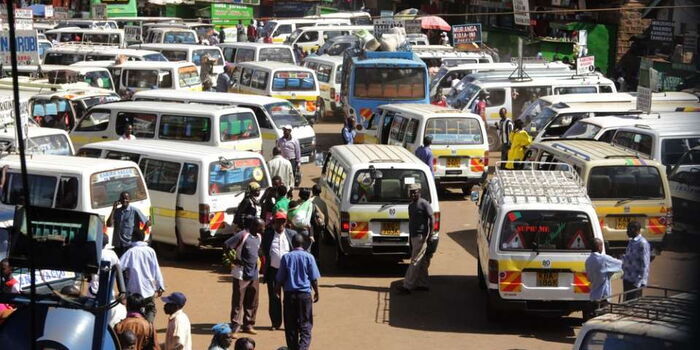
Matatu Saccos Raise Fares as Fuel Shortage Worsens Across Kenya
Matatu fares have started rising sharply in several towns across Kenya as the ongoing fuel shortage continues to disrupt transport services.
The shortage is now pushing up operating costs for public service vehicles, forcing many SACCOs and transport operators to pass the burden to passengers.
This fresh increase is putting even more pressure on commuters who are already struggling with the high cost of living.
Travellers using the busy Nakuru–Nairobi route are among those feeling the biggest impact. Operators on the route have significantly adjusted fares upward, saying the difficulty in getting fuel has made it impossible to maintain the normal charges.
In Nakuru, the fare that many passengers were used to paying, around Ksh450, has now jumped to between Ksh600 and Ksh700 depending on demand and fuel availability.
One matatu operator speaking to the media at a petrol station in Nakuru CBD on Tuesday, April 7, explained that the fare review was unavoidable.
He said that under normal circumstances, passengers pay Ksh450 from Nakuru to Nairobi, but due to the fuel crisis and the struggle to source petrol and diesel, the new charge now stands at about Ksh600. Some operators have gone even higher, especially during peak travel hours.
Transport players are now urging the government to step in quickly, warning that the matatu industry is under growing strain.
They say the sector remains a key part of Kenya’s economy because it moves thousands of workers, traders, and students every day, and prolonged fuel shortages could seriously affect business activity and movement across the country.
For commuters, the situation is becoming more frustrating by the day. Many passengers are now being forced to wait for long hours at bus stages and termini as fewer vehicles remain on the road.
Others are choosing to postpone or completely cancel their travel plans because the new fares are simply too expensive.
In some towns, the shortage has also led to reduced vehicle frequency, making transport even harder to access.
Private motorists are also facing major challenges as the shortage spreads. Many drivers say they are spending hours moving from one petrol station to another trying to find fuel.
In some cases, stations that still have supplies are experiencing long queues, with motorists lining up late into the night in the hope of being served.
The crisis has also spread to Central Kenya. In towns such as Karatina and Nyeri, several filling stations have reportedly run out of regular fuel stock.
This has forced some motorists to buy premium fuels like V-Power, which are still available in a few outlets but come at a much higher cost.
For many drivers, this is adding an extra financial burden at a time when transport and business costs are already rising.
A spot check by Newshub.co.ke along Mombasa Road on Tuesday night painted a similar picture. Several major petrol stations had either run dry or were operating on limited stock, with attendants redirecting motorists to other stations.
The same scenes were also reported in Kisumu, where a number of fuel stations remained closed after exhausting their supplies.
In Western Kenya, the shortage has sparked anger among boda boda riders, who are now accusing some retailers of hoarding fuel.
The riders claim that certain stations are giving priority to larger vehicles while turning away motorbikes, a move that has disrupted transport services and deliveries in many areas.
This has led to growing tension as riders demand fair access to the limited fuel available.
On Tuesday, Energy and Petroleum Cabinet Secretary Opiyo Wandayi said fuel prices could increase by as much as Ksh14 per litre if petrol imported outside the government-to-government fuel import arrangement is allowed into the local market.
His remarks have raised further concerns that the current shortage could soon be followed by a major rise in pump prices.
The CS revealed that a 60,000-metric-tonne shipment of super petrol had recently entered the country outside the approved importation procedures.
In response, he directed the Energy and Petroleum Regulatory Authority (EPRA) to immediately remove the consignment from the monthly pricing formula used to calculate petroleum product costs.
This move is aimed at protecting consumers from sudden price distortions linked to irregular imports.
Even with that intervention, Kenyans are being warned to prepare for a sharp increase in fuel prices in the next review cycle. Industry projections now suggest pump prices could rise by as much as Ksh53.4 per litre, potentially pushing the cost of petrol to around Ksh231.68 per litre.
Such an increase would likely trigger even higher transport fares across the country and further raise the cost of goods and services.
Martin Chomba, the Chairperson of the Petroleum Outlets Association of Kenya (POAK), said during an interview with Inooro FM on Tuesday that the expected increase may fall between Ksh30 and Ksh60 in the next pricing review set for April 14.
According to him, the estimates are based on the weighted average of fuel shipments that arrived through the Port of Mombasa between March 9 and April 10.
He added that the current stability in pump prices should only be seen as temporary, warning that both rising global oil prices and local supply pressures are likely to push prices much higher in the coming days.
If the shortage continues, the ripple effect could be felt across transport, food distribution, and household expenses, making life even harder for ordinary Kenyans.
Overall, the fuel shortage is quickly turning into a national transport and economic concern. With matatu fares already climbing, boda boda services disrupted, and private motorists struggling to find fuel, pressure is now mounting on the government and energy regulators to restore supply before the crisis deepens further.
Join Kenya Govt Official WhatsApp Channel to stay updated on time
https://whatsapp.com/channel/0029VaWT5gSGufImU8R0DO30
