


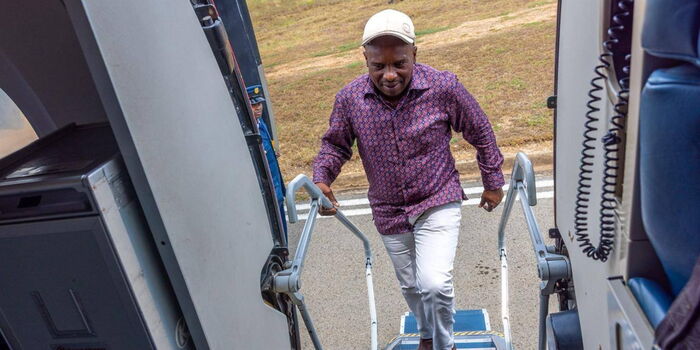
Kindiki Faces Tough Questions Over Reported Ksh8 Million Daily Helicopter Costs
The Office of the Deputy President has come under fresh pressure after lawmakers raised concerns over the large amounts of public money reportedly being spent on helicopter travel.
The issue came up on April 9 when members of Parliament questioned the office’s spending records, especially the high cost of daily chopper hire services linked to Deputy President Kithure Kindiki’s movements.
The matter is now being reviewed by the Public Accounts Committee (PAC), which has opened an inquiry into pending bills worth Ksh478 million owed to suppliers and service providers for the 2024/2025 financial year.
According to documents tabled before the committee, a significant share of this amount, estimated at around Ksh150 million, went toward helicopter hire services.
Lawmakers examining the records were particularly alarmed by one specific expenditure entry that showed up to Ksh8.08 million spent on helicopter services in a single day.
The flight log reportedly covered several destinations, including Tharaka Nithi, Laikipia, Isiolo, and Kitui, all within the same day.
This revelation immediately sparked debate among committee members over whether such spending levels can be justified at a time when Kenyans are already worried about the country’s financial pressure.
Rarieda Member of Parliament Otiende Amollo was among the lawmakers who openly questioned the practicality of the spending. He pointed to the Ksh8.08 million entry and wondered whether it made sense for so much taxpayer money to be used on helicopter transport in just one day.
He further noted that several other entries in the records also reflected chopper expenses ranging between Ksh3 million and Ksh4 million, raising even more concerns about how often the service is being used and whether the cost reflects value for money.
The committee also turned its attention to the repeated trips connected to Tharaka Nithi, which is Deputy President Kindiki’s home county.
Some lawmakers questioned whether public resources may have been used for personal or non-official travel, especially in situations where there was no clear evidence linking the flights to official government duties.
The concern was not only about the amount spent, but also about whether the purpose of the trips matched the standards expected in the use of public funds.
However, Committee Chairperson Tindi Mwale defended the Deputy President’s right to travel, saying there should be nothing wrong with him going home and returning, as long as the trips are properly accounted for.
Even so, the committee insisted that all travel costs must still be supported by proper documentation and clear justification, especially because the office is already carrying a large amount of unpaid bills.
Beyond the helicopter spending, lawmakers also widened their scrutiny to include hospitality-related expenses within the Deputy President’s office. These included payments for catering services, staff meals, food supplies, and even fresh flowers.
Members of the committee said all these expenses must be reviewed carefully to ensure there is accountability and that taxpayers are receiving real value from the money being spent.
Another major concern raised by PAC was the lack of a functioning audit committee in the office. Lawmakers described this as a serious weakness because such a committee plays a critical role in overseeing spending, identifying waste, and ensuring that financial procedures are followed.
Without it, the risk of poor accountability and unchecked expenditure becomes even higher.
As a result, the committee has now directed the Office of the Deputy President to submit a full breakdown within one week, clearly explaining how the Ksh8 million helicopter cost was arrived at.
The lawmakers want details on flight routes, service providers, hourly charges, and the official purpose of each trip so they can determine whether the spending was reasonable.
In its response, the Office of the Deputy President said it is already engaging the National Treasury to deal with budget limitations and reduce the growing pending bills.
The office also said it plans to introduce better strategies in the future to improve spending controls and ensure more effective management of public resources.
The inquiry adds to wider public concerns about government spending priorities, especially at a time when Kenya continues to face rising debt levels, budget pressure, and an increasing cost of living.
For many Kenyans, the questions surrounding the Deputy President’s travel expenses reflect a bigger national conversation about transparency, accountability, and responsible use of public money.
Join TUKO KADI Official WhatsApp Channel to stay updated on time
https://whatsapp.com/channel/0029VaWT5gSGufImU8R0DO30
