


Ruto Issues New Directives on School Fees Ahead of Reopening
Activist Mwabili Mwagodi has been released after a tense confrontation at the Deputy County Commissioner’s (DCC) office in Githunguri, Kiambu County, on Friday, April 17.
The incident has raised fresh concerns about the safety of activists and journalists working on sensitive historical and land-related issues in the country.
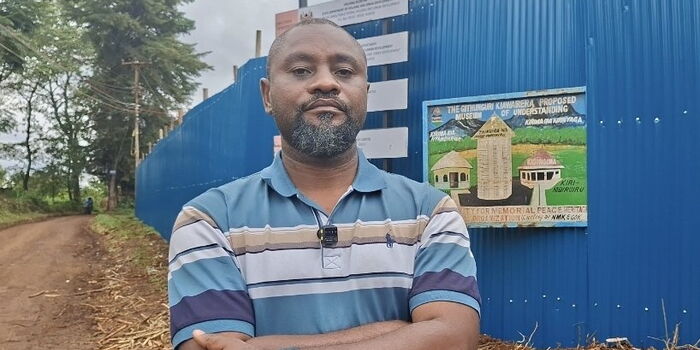
Mwagodi had travelled to Githunguri to document and highlight the historical and cultural importance of a site known as Githunguri Kia Wairera.
This area is currently the location of an ongoing Affordable Housing Project, which has been facing public scrutiny and legal challenges due to its cultural significance.
According to Mwagodi, his intention was purely to tell the story of the land and educate the public on its heritage.
While carrying out his work, Mwagodi says he was suddenly confronted by unidentified individuals who questioned why he was recording near the site.
He later shared a video clip showing part of the confrontation, where an unseen individual could be heard interrogating him about his presence.
He explained that the individuals were inside a vehicle and appeared to be working together.
The situation quickly escalated when the group allegedly stopped him from filming and forced him into their vehicle. He was then taken to the DCC office in Githunguri, where he claims he was held against his will. During this time, his equipment, including a microphone, was confiscated.
He also reported that the individuals attempted to take his phone and damaged his camera stand during the struggle.
In a distress message posted on social media shortly before his release, Mwagodi wrote that he had been attacked and detained by unknown people.
He stated that he had been locked inside the DCC office, raising alarm among his followers and fellow activists who demanded his immediate release.
The situation took a turn after Githunguri Assistant Police Commandant, Chief Inspector Jonathan Koech, was contacted.
Upon learning about the incident, Koech intervened and ordered that Mwagodi be released immediately. He also directed that all his confiscated equipment be returned without further delay.
Following the intervention, Mwagodi confirmed that he was safe and out of danger. In an update shared online, he thanked the police commandant for stepping in and resolving the situation.
He also mentioned that Koech advised him to inform the local police station commander in advance if he plans to carry out any public recording activities in the area in the future.
Mwagodi revealed that during the standoff, he had managed to get in touch with his lawyer through a video call.
This, he believes, played a role in preventing the situation from escalating further, although it limited his ability to document the individuals who had confronted him.
He also linked the incident to a similar encounter that took place earlier on April 11. On that day, he claimed he was blocked from accessing the Kiriri area by unknown individuals who allegedly threatened him with violence.
These repeated confrontations, he says, point to a pattern of intimidation aimed at stopping him from documenting the issue.
The activist has been closely following developments surrounding the disputed 58-acre piece of land known as Kiriri. He explained that the land holds deep cultural value for the Agikuyu community.
Traditionally, it was used as a site where young girls underwent initiation ceremonies into adulthood before the arrival of missionaries and British colonial rule.
Beyond its cultural role, Mwagodi noted that the land also has historical importance in Kenya’s fight for independence. Between 1939 and 1952, the site hosted a college that played a key role in the African anti-colonial movement.
According to him, the institution was used to educate and prepare individuals who later participated in resistance efforts against colonial rule.
The incident comes just days after a major court ruling related to the same land. On April 15, Justice Andrew Bahati Mwamuye ordered the government and contractors involved in the housing project to vacate the site.
The court also directed that any barriers or restrictions placed around the land be removed until the ongoing case is fully heard and determined.
This ruling added more weight to concerns raised by activists and community members who believe the project threatens both the cultural heritage and historical identity of the area.
Mwagodi’s experience now highlights the growing tension surrounding the land dispute, as different parties continue to clash over its use and ownership.
Join TUKO KADI Official WhatsApp Channel to stay updated on time
https://whatsapp.com/channel/0029VaWT5gSGufImU8R0DO30
