


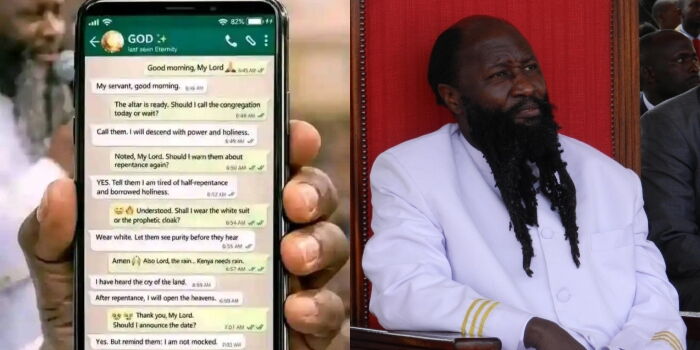
A WhatsApp screenshot circulating widely on social media has placed Prophet David Owuor at the center of online debate, after the image allegedly showed him holding a conversation with God through the messaging platform.
The image quickly spread across WhatsApp groups, Facebook, and X (formerly Twitter), attracting mixed reactions from Kenyans, with some treating it as satire while others expressed concern over its authenticity.
In response to the viral image, the Ministry of Repentance and Holiness released a strong statement dismissing the screenshot as completely fake.
The church described the image as fabricated, misleading, and malicious, urging members of the public to ignore it and refrain from sharing it further.
According to the ministry, the screenshot does not represent any real communication and was created with the intention of damaging the reputation of the prophet and mocking religious beliefs.
The ministry clarified that Prophet Owuor has never claimed to communicate with God through WhatsApp or any similar platform. In its statement, the church emphasized that the viral image was a deliberate attempt to misinform the public and create unnecessary controversy.
Church officials further argued that the circulation of such content distracts believers from the ministry’s core teachings, which focus on repentance, holiness, and spiritual preparation.
The controversy comes amid renewed public attention following a recent sermon in which Prophet Owuor was seen holding up screenshots on a mobile phone during his preaching. During the sermon, he reportedly stated that the messages contained divine instructions calling people to repent.
He also claimed that the messages included a promise from God to open the heavens and bring rain. These remarks sparked intense discussion online, with critics and supporters interpreting the statements differently.
Despite this, the ministry maintains that the specific WhatsApp screenshot currently circulating online is not genuine. Church leaders described it as an attack designed to ridicule the Christian faith and undermine the spiritual message delivered by the ministry.
They encouraged followers and members of the public to verify information before sharing it, warning that false content spreads quickly and can easily mislead people.
The situation has unfolded shortly after an investigative report aired by TV47 on February 9 titled “Divine or Deceptive.” The report examined some of Prophet Owuor’s healing claims and included testimonies from individuals who allegedly experienced worsening medical conditions after abandoning conventional treatment.
The broadcaster also reported alleged attempts to influence the airing of the program, claims that were strongly denied by the ministry, which dismissed the allegations as baseless and described them as blackmail and false reporting.
Analysis of the Viral WhatsApp Screenshot
A closer look at the viral image suggests that it was created as satire rather than an authentic leak. The screenshot imitates the appearance of a real WhatsApp conversation, including message bubbles, timestamps, and read receipts.
Elements such as “last seen Eternity” appear designed to blend ordinary messaging features with religious symbolism, creating a humorous or ironic effect for viewers.
However, several inconsistencies within the image raise serious doubts about its authenticity. One of the most notable issues lies in the timestamps displayed in the conversation.
The exchange appears to occur within a very short period, reflecting normal human messaging speed rather than the timeless nature implied by the subject matter. This contrast has been widely pointed out online as part of the satire.
More importantly, the sequence of messages appears chronologically impossible. In the screenshot, a message allegedly sent at 7:03 AM receives a reply timestamped at 7:01 AM, suggesting that the timeline was edited or constructed artificially.
Such inconsistencies strongly indicate that the image is digitally manipulated rather than a genuine communication record.
Observers note that these timestamp errors serve as clear internal evidence that the screenshot is a fabricated digital creation.
As a result, many analysts and social media users have concluded that the image was intended more as parody or criticism than as a factual representation of events.
As the debate continues online, the ministry has reiterated its call for responsible sharing of information, urging Kenyans to avoid spreading unverified content and to focus on respectful public discussion, especially when matters of faith and religion are involved.
Join Tutam Official WhatsApp Channel to stay updated on time
https://whatsapp.com/channel/0029VaWT5gSGufImU8R0DO30
