


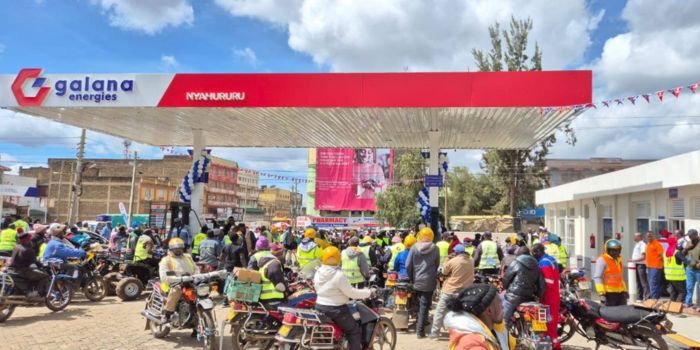
Treasury Gives Fresh Update on Fuel Stocks, Warns Against Panic Buying
Treasury Cabinet Secretary John Mbadi has moved to calm Kenyans over concerns about possible fuel shortages, assuring the country that petroleum supplies remain stable despite the ongoing rise in global oil prices.
Speaking before the National Assembly Finance Committee on Thursday, April 2, Mbadi said the government has enough fuel reserves to meet current demand and urged the public not to rush to fuel stations out of fear.
According to Mbadi, Kenya currently has enough petrol to last 16 days, diesel for 19 days, and kerosene for up to 49 days.
He added that the situation is expected to improve further because an extra 290,000 metric tonnes of petroleum products are already on the way and will soon be received into the country.
This, he explained, should help strengthen national reserves and ease fears of any immediate supply disruption.
The CS further explained that the government is actively putting measures in place to keep fuel prices from rising sharply and affecting the wider economy.
This comes at a time when the international oil market remains under pressure following the conflict in the Middle East, which has caused uncertainty in supply routes and pushed prices up in many countries.
Mbadi noted that although the global market is unstable, Kenya is still in a safe position and will continue accessing enough petroleum products through existing supply arrangements.
He stressed that the government’s focus is to cushion consumers and businesses from sudden price shocks that could increase the cost of transport, food, and other basic goods.
At the same time, he issued a strong warning to fuel station owners against hoarding fuel in anticipation of higher pump prices.
Mbadi said some dealers may be tempted to hold back stock while waiting for a possible increase, but cautioned that such speculation is unnecessary because the government has systems in place to control and stabilise prices.
He made it clear that even if pump prices were to rise in the coming review cycle, the increase may not be as drastic as many people are imagining. For that reason, he said there is no need for businesses or consumers to panic.
“The prices may not go as high as some people expect. Even if there is an increase, we have mechanisms to stabilise it, so there is no need for speculation,” Mbadi said.
Motorists were also advised against unnecessary panic buying. Mbadi said rushing to fill up tanks out of fear only creates artificial pressure on the market and can worsen anxiety among the public.
He pointed out that even a full tank only lasts a short period for most drivers, meaning the panic does not solve the problem.
He urged Kenyans to remain calm, trust the government’s supply management systems, and avoid creating false shortages through fear-driven purchases.
His remarks come amid growing concern after reports emerged that some fuel stations had started rationing supplies due to fears linked to global oil disruptions.
The situation was worsened by fake social media claims suggesting that the Energy and Petroleum Regulatory Authority (EPRA) had already increased fuel prices.
However, EPRA quickly dismissed the circulating notice as fake and misleading, clarifying that official maximum pump prices are only announced on the 14th day of every month under the Petroleum Act 2019.
The regulator emphasised that any price schedule shared outside that process should be treated as false information.
Overall, the government is seeking to reassure Kenyans that there is no immediate fuel crisis and that both supply levels and price controls are being closely monitored.
With more shipments expected and stabilisation measures already under consideration, motorists and businesses have been urged to avoid panic, speculation, and hoarding as the country navigates the global oil market uncertainty.
Join Kenya Govt Official WhatsApp Channel to stay updated on time
https://whatsapp.com/channel/0029VaWT5gSGufImU8R0DO30
