


UDA Unveils Plan to Challenge ODM’s Dominance at the Coast Ahead of 2027 Polls
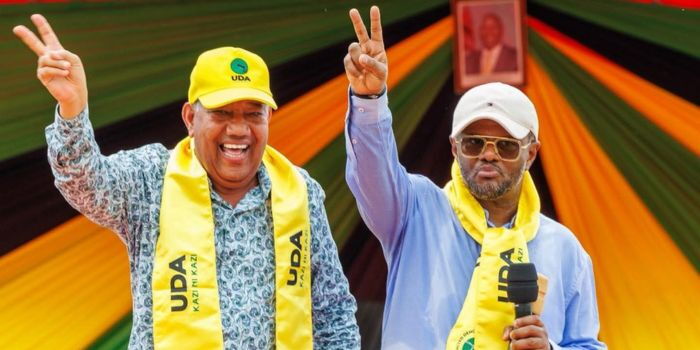
The United Democratic Alliance (UDA) has now laid out a fresh political strategy aimed at winning more support in Kenya’s coastal region as the country slowly shifts focus to the 2027 General Elections.
This new plan comes at a time when political tensions are rising between UDA and the Orange Democratic Movement (ODM), especially over the growing debate on zoning of party strongholds.
While addressing supporters at Burhani Grounds in Mombasa on Tuesday, April 7, UDA Secretary General Hassan Omar said the party has already stepped up its grassroots mobilisation efforts across the Coast.
According to Omar, UDA is determined to strengthen its presence in the region by building support from the village level all the way to county leadership structures.
He explained that leaders from the coastal counties have now agreed to work together closely in organising political activities in local communities.
Their main focus, he said, is to reach voters directly in villages, towns, and key grassroots networks so as to position UDA strongly ahead of the next elections.
The renewed push was further reinforced through a joint declaration by top coastal leaders allied to the ruling side.
Senate Speaker Amason Kingi, Cabinet Secretary Salim Mvurya, and Governor Issa Timamy all pledged to continue working together to unite the Coast under a shared political direction.
They also called on local leaders, party officials, and supporters to intensify mobilisation efforts at the grassroots to ensure the region becomes more competitive politically in 2027.
Their declaration comes at a sensitive time when disagreements within the broad-based government arrangement continue to emerge.
One of the biggest issues causing friction is the question of zoning, with ODM insisting that coalition discussions ahead of 2027 must include agreements on which parties should field candidates in certain regions.
UDA, however, has remained firm in rejecting the zoning approach. The party argues that democracy should allow every political outfit to freely field candidates in any part of the country without restrictions.
According to UDA leaders, no party should be limited by geographical boundaries or be told where it can or cannot compete.
Hassan Omar revealed that UDA currently has more than 16,000 aspirants from across the country preparing to contest different elective seats.
He made it clear that none of them will be denied an opportunity to run based on claims that a certain area belongs to another party.
Omar strongly defended the party’s open competition policy, saying UDA is ready to allow rivals to contest even in its perceived strongholds. At the same time, he insisted that UDA expects the same political freedom in regions traditionally associated with other parties.
He posed a direct challenge to those supporting zoning, questioning why any party should feel threatened if it truly enjoys solid support from its members.
“Anyone who wants to challenge UDA in areas considered our strongholds is free to do so, and we will not block them. In the same spirit, we do not want anyone telling us that we cannot present candidates in their strongholds.
If that is truly your stronghold, why should you be worried? If those are genuinely your supporters, then why panic when UDA fields candidates there?” Omar asked.
On the other hand, ODM leaders have continued to stand their ground on the zoning issue. The party insists that any coalition talks involving UDA must respect ODM’s traditional bases, especially in regions where it has enjoyed long-standing political dominance.
Since Sunday, April 5, senior ODM officials led by party chairperson Gladys Wanga have openly declared that they will not allow UDA to field candidates in areas they consider ODM strongholds.
Wanga maintained that ODM would only enter any future negotiations from a position of equality and not as a junior partner.
“If we go into negotiations, we must do so as equal partners and not as the weaker side,” Wanga said.
Her remarks were echoed by Alego Usonga MP Samuel Atandi, who took an even stronger position against UDA’s plans.
“There will be no negotiations when it comes to zoning. We are not going to allow UDA to plant candidates here in Muhoroni. All our strongholds and all those areas remain reserved for ODM,” Atandi stated.
Even so, the zoning debate has not received full support from within ODM itself. Some leaders in the party have openly criticised the proposal, warning that it could weaken the democratic values ODM has defended for many years.
Suba North MP Millie Odhiambo is among those who have opposed the zoning idea. She argued that ODM has built its popularity through open competition and should not now appear to be limiting political space for the sake of individual interests.
Speaking on the matter, Odhiambo said ODM has always fielded candidates based on its popularity and support from the people, without relying on any zoning arrangements.
“On the issue of zoning, ODM is a popular party and it has always fronted candidates without any form of zoning. Pushing the zoning agenda now suggests that personal political interests are being placed ahead of the needs and wishes of the people we represent,” she said.
The growing disagreement now highlights the early battle lines forming ahead of 2027, with both UDA and ODM appearing ready for a fierce political contest, particularly in regions long viewed as traditional party strongholds such as the Coast.
Join Kenya Govt Official WhatsApp Channel to stay updated on time
https://whatsapp.com/channel/0029VaWT5gSGufImU8R0DO30
