


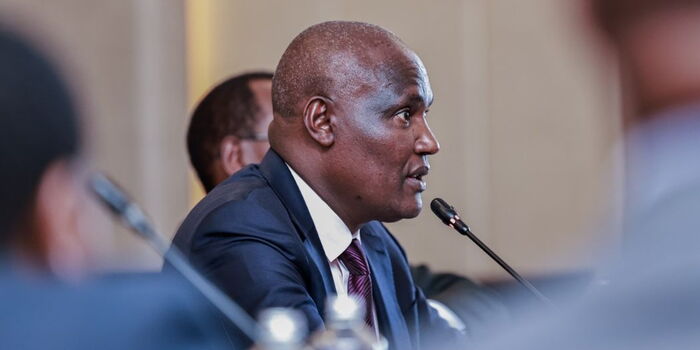
CS Mbadi Invites Kenyans to Share Ideas Ahead of 2026/27 Budget, Signals Possible PAYE Changes
The National Treasury has called on Kenyans to actively take part in shaping the country’s next budget, as preparations begin for the 2026/27 financial year.
In a public notice released on Wednesday, Treasury Cabinet Secretary John Mbadi asked citizens, businesses, and stakeholders to submit their views, proposals, and creative ideas before the budget is officially presented in Parliament on June 11.
According to Mbadi, the government wants wide public participation to ensure that the final budget reflects the real needs and priorities of ordinary Kenyans.
He explained that contributions should focus on key areas such as economic policies, government spending priorities, and tax measures that can support inclusive growth while advancing the Bottom-Up Economic Transformation Agenda (BETA).
The Treasury is particularly interested in practical solutions that can help reduce the high cost of living, improve food security across the country, and create more opportunities for young people and women.
These areas have remained a major concern for many households, especially as Kenyans continue to face economic pressure from rising prices and limited job opportunities.
At the same time, the government is also seeking ideas that can support major development goals under President William Ruto.
These include strengthening human capital through better education and skills development, improving infrastructure such as roads and energy systems, and maintaining overall economic stability.
The Treasury believes that input from the public can help refine these plans and make them more effective.
In addition, Kenyans have been asked to suggest ways of increasing domestic revenue without overburdening citizens. This includes ideas on how to widen the tax base, improve tax compliance, and ensure responsible government spending.
The goal, according to Mbadi, is to balance revenue collection with the need to protect households and businesses from excessive financial strain.
To make the process accessible, the Treasury has provided an official channel where submissions can be sent.
Kenyans are encouraged to email their suggestions to budgetstatement@treasury.go.ke, with a copy to budgetstatement@gmail.com. All proposals must be submitted before the close of business on May 8, 2026.
This public consultation comes at a crucial time, as the government finalises key policy decisions that will shape the upcoming Finance Bill 2026. This bill will outline how the government plans to raise revenue and allocate funds in the next financial year, making it one of the most important policy documents for the country’s economy.
In recent months, discussions around tax reforms—especially Pay-As-You-Earn (PAYE)—have attracted significant public attention. Both President Ruto and CS Mbadi have previously hinted at possible changes aimed at easing the tax burden on workers.
One of the proposals that sparked debate involved lowering PAYE rates, including introducing a 0 per cent tax band for individuals earning up to Ksh30,000 per month, along with adjustments to higher income brackets.
However, Mbadi recently clarified that the government has changed its approach to implementing these tax reforms.
While appearing before the National Assembly’s Budget and Appropriations Committee on March 31, he explained that the Treasury had dropped plans to introduce a separate Tax Laws (Amendment) Bill. Instead, all proposed tax changes will now be included in the Finance Bill 2026.
He noted that the decision was mainly influenced by time constraints, as introducing a separate bill so close to the main budget process would have been difficult to manage.
By combining all tax proposals into one comprehensive bill, the government hopes to streamline the legislative process and ensure timely approval.
This move means that all expected tax measures—projected to raise around Ksh57 billion—will now be handled under a single legal framework.
While this approach may improve efficiency, it has also raised questions among economists and financial experts about how the changes will impact different income groups.
As the deadline for public submissions approaches, Kenyans now have a rare opportunity to directly influence national policy.
The ideas collected during this process are expected to play a key role in shaping a budget that not only addresses current economic challenges but also sets the country on a path toward long-term growth and stability.
Join TUKO KADI Official WhatsApp Channel to stay updated on time
https://whatsapp.com/channel/0029VaWT5gSGufImU8R0DO30
