


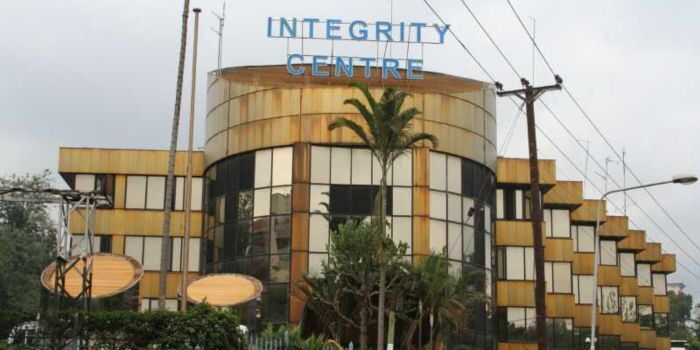
Kenyan EACC Boss Abdi Mohamud Elected to Lead Powerful Regional Anti-Corruption Body
The Chief Executive Officer of Kenya’s Ethics and Anti-Corruption Commission (Ethics and Anti-Corruption Commission), Abdi Mohamud, has been elected as the new President of the Eastern Africa Association of Anti-Corruption Authorities (Eastern Africa Association of Anti-Corruption Authorities), a major regional institution that brings together anti-graft agencies from across Eastern Africa.
His election marks an important moment for Kenya, strengthening the country’s influence in regional efforts to fight corruption and economic crimes that often cross national borders.
The appointment was made during the 16th Annual General Meeting of the association, which was held in Nairobi between April 20 and April 24, 2026.
The meeting brought together senior officials and delegates from several countries in the region to discuss cooperation and shared strategies in combating corruption.
A rise through regional leadership ranks
Before becoming President, Abdi Mohamud had already been serving as the Vice President of the association for two consecutive years.
During that time, he played an active role in guiding discussions on regional cooperation, strengthening anti-corruption systems, and improving coordination between member states.
His elevation to the top position was widely seen as a continuation of his involvement and leadership within the organization.
He now takes over from Ugandan judge Naluzze Aisha Batala, who has been praised for her strong leadership, commitment, and efforts to improve anti-corruption collaboration among member countries during her term.
Commitment to regional cooperation
In his acceptance remarks, Mohamud expressed appreciation for the confidence placed in him by member states. He pledged to build on the progress already made and to strengthen unity among anti-corruption agencies in the region.
He emphasized that corruption is increasingly becoming a cross-border challenge, especially with the rise of complex financial crimes that involve multiple jurisdictions.
Because of this, he stressed that no single country can effectively fight corruption on its own. Instead, he called for stronger regional coordination and teamwork.
Key priorities for his leadership
As the new President of the regional body, Mohamud is expected to focus on several key priorities aimed at improving the effectiveness of anti-corruption efforts across Eastern Africa.
These include strengthening mutual legal assistance systems so that countries can more easily support each other in investigations and prosecutions.
He also plans to enhance intelligence sharing between agencies, which is seen as crucial in tracking illicit financial flows and corruption networks.
Another major focus will be promoting joint investigations among member states, especially in cases involving cross-border corruption and asset recovery.
He is also expected to push for greater harmonisation of anti-corruption laws and policies so that legal frameworks across the region can work more effectively together.
With his background as an Advocate of the High Court of Kenya and his long experience as an investigator, Mohamud is seen as well positioned to lead these reforms and strengthen institutional cooperation.
New research centre planned in Nairobi
Mohamud also highlighted the upcoming launch of the Centre for Research on Ethics and Anti-Corruption (Centre for Research on Ethics and Anti-Corruption), commonly referred to as CEREAC, which is expected to be officially opened in June 2026 in Nairobi.
He described the centre as an important milestone that will support evidence-based policymaking and improve how anti-corruption strategies are designed and implemented. The facility is expected to serve as a hub for research, training, and policy development for the region.
Broader outcomes from the regional meeting
The Annual General Meeting that led to his election also brought together representatives from eight countries. The sessions included executive committee meetings, regional conferences, and workshops focused on asset recovery and strengthening cooperation between institutions.
Participants exchanged ideas on best practices, discussed challenges facing anti-corruption efforts, and explored ways to improve coordination in tackling financial crimes across borders.
Performance of Kenya’s anti-graft agency
The developments also come at a time when the Ethics and Anti-Corruption Commission has recorded notable performance improvements at the national level. Over the last three years, the commission has achieved a conviction rate of about 72 percent in corruption-related cases.
During the same period, it has managed to recover approximately Ksh7.4 billion in public funds that were previously lost through corrupt practices. In addition, the agency has reportedly prevented the potential loss of Ksh10.74 billion by stopping corruption schemes before they could succeed.
Despite these achievements, the commission continues to push for additional powers, including prosecutorial authority, which it believes would further strengthen its ability to fight corruption more effectively.
Overall, Abdi Mohamud’s new regional role is expected to deepen Kenya’s leadership in anti-corruption efforts and reinforce cooperation across Eastern Africa at a time when cross-border financial crime remains a major challenge.
Join TUKO KADI Official WhatsApp Channel to stay updated on time
https://whatsapp.com/channel/0029VaWT5gSGufImU8R0DO30
