


CS Wandayi Explains President Ruto’s Directives Behind Latest Fuel Price Changes
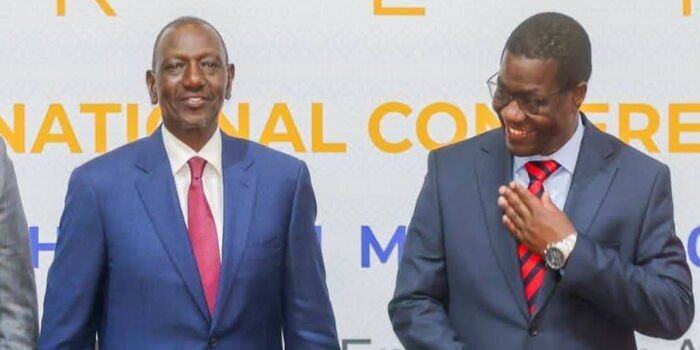
Energy and Petroleum Cabinet Secretary Opiyo Wandayi has disclosed that President William Ruto personally stepped in to influence the latest fuel price review by ordering that kerosene prices remain unchanged, even as the cost of petrol and diesel went up.
Speaking in Siaya County on Wednesday, April 15, Wandayi moved to calm public concern following the latest increase in pump prices.
While leading a mass voter registration and public sensitisation exercise in Ugunja, the CS assured residents that the government had already put measures in place to shield ordinary Kenyans from the full impact of the price hike.
Wandayi explained that although many Kenyans had seen the announced rise in fuel prices and were understandably worried, there was no need for panic because President Ruto’s administration had taken deliberate action to reduce the burden on consumers.
He noted that without government intervention, the increase would have been much higher than what was eventually announced.
According to the CS, President Ruto directed the government to roll out a Ksh6.2 billion fuel subsidy to cushion motorists, businesses, and households from a sharper jump in prices.
He said the subsidy played a major role in softening the increase, preventing what could have been a far more painful adjustment at fuel stations across the country.
Wandayi further revealed that the President gave a specific order that kerosene prices should not be touched during the latest review.
He said this decision was made with low-income families in mind, especially those in rural and informal urban areas who still depend heavily on kerosene for cooking and lighting their homes.
By keeping kerosene prices steady, the government aimed to protect vulnerable households from additional financial pressure.
In his address, the CS linked the rise in fuel prices to the ongoing conflict in the Middle East, saying global geopolitical tensions had continued to disrupt oil supply chains and push international fuel costs higher.
He expressed optimism that once the conflict eases and stability returns in the region, global oil prices are likely to drop, which would eventually translate into lower pump prices locally.
He added that President Ruto had been clear in his instructions that even if petrol and diesel had to rise because of international market forces, kerosene should remain protected.
Wandayi said this was part of a broader strategy to ensure the most affected groups in society are cushioned during difficult economic periods.
In addition to the subsidy, the CS also disclosed that the government had temporarily lowered Value Added Tax (VAT) on fuel from 16 per cent to 13 per cent for a period of three months.
He said this tax relief measure was introduced to further reduce the ripple effects of rising fuel costs on transport, food, and other essential services.
His remarks came shortly after the latest review by the Energy and Petroleum Regulatory Authority (EPRA), which was released on Tuesday, April 14, 2026.
In the new April to May 2026 pricing cycle, EPRA increased the cost of Super Petrol by Ksh28.69 per litre and Diesel by Ksh40.30 per litre, while leaving kerosene prices unchanged in line with the government’s intervention.
Following the announcement, Public Service Vehicle (PSV) operators across the country have already signalled fare increases of at least 25 per cent on various routes.
The higher transport costs are also expected to push up the prices of goods and services, raising concerns about the cost of living for millions of Kenyans.
Even so, Wandayi maintained that the government’s latest actions, including the subsidy, VAT reduction, and protection of kerosene prices, were all aimed at ensuring the impact on wananchi remains as manageable as possible.
Join TUKO KADI Official WhatsApp Channel to stay updated on time
https://whatsapp.com/channel/0029VaWT5gSGufImU8R0DO30
