


Ruto Responds to Opposition’s Threat of Nationwide Protests Over Rising Fuel Prices
President William Ruto has strongly criticised calls by the United Opposition for nationwide protests following the latest fuel price increase, urging Kenyans to remain calm and avoid actions that may not solve the real problem.
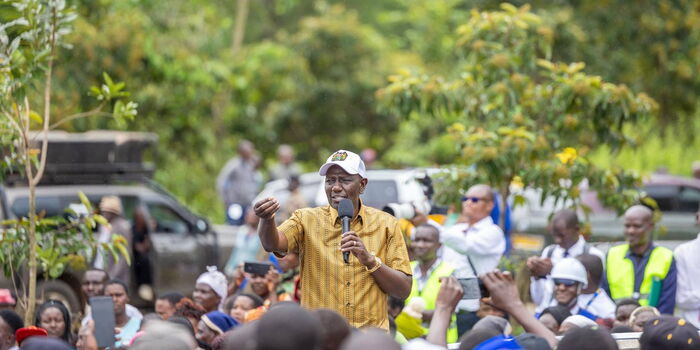
While speaking on Wednesday, April 15, the President dismissed the idea that street demonstrations would help lower the cost of fuel.
He challenged those pushing for protests to think practically and focus on realistic solutions instead of political pressure.
Ruto said some leaders were trying to convince Kenyans that protests were the answer simply because fuel prices had gone up. However, he questioned how demonstrations would change the global factors behind the rise.
According to the President, the country must approach the issue with reason and proper judgment rather than emotions.
“Some people are saying that because fuel prices have gone up globally, they now want to organise protests. But will protests really make fuel prices come down? We must use wisdom and common sense in handling this matter,” the President said.
Speaking during a public rally in Suneka, Kisii County, Ruto admitted that the increase in fuel prices has affected many Kenyans.
Even so, he assured the public that his government has already taken steps to reduce the burden and protect households from the full impact of the price jump.
The Head of State explained that the increase was largely caused by the ongoing conflict in the Middle East, which has interfered with the global oil supply chain.
He noted that whenever such international conflicts happen, oil-producing countries are affected, and this eventually pushes up prices in countries like Kenya.
Ruto, however, maintained that Kenya is in a better position than many countries in the region because of the government-to-government fuel import arrangement.
He said this framework has helped the country maintain a stable fuel supply while also preventing even sharper price increases.
“I want to assure Kenyans that although the war in the Middle East has pushed fuel prices up across the world and even in our neighbouring countries, the G-to-G fuel deal has helped us keep supply stable and control the price increase,” he said.
The President further revealed that the government has set aside Ksh6.5 billion specifically to cushion Kenyans from the rising fuel costs.
In addition, he announced a temporary reduction in Value Added Tax (VAT) on fuel, saying the rate would be lowered from 16 per cent to 13 per cent for the next three months to ease the pressure on consumers.
He added that the government had also taken deliberate steps to protect vulnerable families by ensuring that kerosene prices remain unchanged.
Since many low-income households still depend on paraffin for cooking and lighting, he said keeping the price stable was necessary to shield them from further hardship.
Ruto also said the administration had reduced certain tax obligations for the next three months as part of the broader plan to cushion wananchi.
He emphasised that the government remains focused on finding additional ways to prevent further increases and maintain price stability in the energy sector.
The President’s remarks came shortly after the United Opposition issued him with a seven-day ultimatum, demanding immediate action on what they described as serious concerns in the energy sector.
The opposition warned that failure to address the issues within the set period would lead to nationwide mass protests.
During a press briefing held in Nairobi on Wednesday afternoon, former Deputy President Rigathi Gachagua called on President Ruto to urgently direct National Assembly Speaker Moses Wetang’ula to convene a special parliamentary sitting within the next seven days.
Gachagua said Parliament should immediately discuss measures to protect Kenyans from the rising cost of fuel and the growing economic pressure facing ordinary citizens.
He also criticised the recently approved National Infrastructure Fund, which is expected to be financed through the sale of government assets.
According to Gachagua, the fund should be abolished, arguing that the proceeds from any sale of state assets should instead be redirected toward cushioning Kenyans against what he termed one of the most severe fuel price hikes in recent history.
The opposition further proposed the removal of the Road Maintenance Levy as another urgent intervention. The levy was recently increased from Ksh18 to Ksh25 per litre of fuel, a move opposition leaders say has directly worsened the cost of living.
They argued that scrapping the levy would provide immediate relief to motorists, transport operators, businesses, and households already struggling with higher transport and commodity prices.
The growing standoff now sets the stage for a major political showdown, with the government defending its measures as necessary and the opposition insisting that more direct relief must be offered to protect Kenyans from the ripple effects of rising fuel prices.
Join TUKO KADI Official WhatsApp Channel to stay updated on time
https://whatsapp.com/channel/0029VaWT5gSGufImU8R0DO30
