


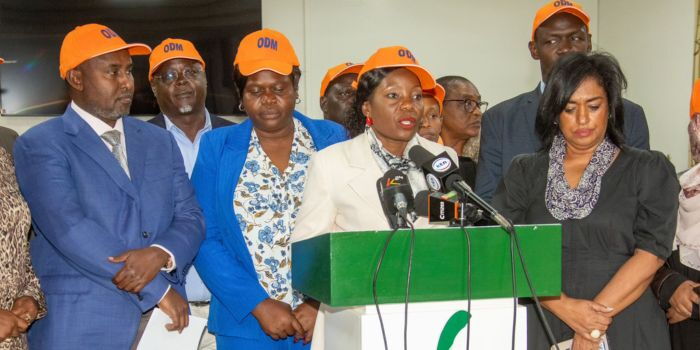
The Orange Democratic Movement (ODM) has sent a clear and firm message to its broad-based partner, the United Democratic Alliance (UDA), as tensions continue to rise over disagreements surrounding electoral zoning.
This warning was made public following a Central Committee meeting held on Thursday, April 16. Speaking after the meeting, acting ODM Secretary General Catherine Omanyo raised concerns about what she described as “unwarranted utterances” from some senior UDA leaders.
According to her, such remarks are not only unnecessary but also risk creating fear, confusion, and tension among ODM supporters at a time when the working relationship between the two parties is being closely monitored by the public.
Omanyo emphasized that ODM remains committed to its core values and principles, and therefore expects mutual respect from its political partners. She warned that careless political statements could damage trust and destabilize the fragile cooperation between the two sides.
In her remarks, she made it clear that ODM would not tolerate statements that appear to undermine its position or create unease within its support base.
Her comments come at a time when political temperatures are rising over the issue of zoning ahead of the 2027 General Election. Within ODM, a section of leaders is strongly advocating for zoning arrangements that would see certain regions reserved exclusively for ODM candidates.
This proposal would effectively block other parties, including UDA, from fielding candidates in areas considered ODM strongholds.
The push for zoning is being led by Gladys Wanga, who has taken a firm stand on the matter. While addressing supporters at a recent rally in Homa Bay, she declared that zoning is not open for negotiation and should be treated as a key condition in any discussions involving ODM and the Kenya Kwanza administration.
Her remarks have further fueled the debate, drawing both support and criticism from different political quarters.
However, the proposal has been strongly rejected by UDA leadership. Hassan Omar, the Secretary General of UDA, dismissed the zoning idea, insisting that Kenya’s democratic space allows every political party the freedom to field candidates in any part of the country.
He argued that restricting parties from certain regions goes against the spirit of democracy and fair competition.
Apart from the political standoff, Omanyo also addressed growing public concern over the recent rise in fuel prices, which has triggered widespread frustration among Kenyans.
She acknowledged that the increase is partly driven by global economic challenges, including fluctuations in international oil prices. However, she stressed that this does not remove the government’s responsibility to protect citizens from the harsh economic impact.
Omanyo urged the government to step up its efforts and introduce stronger measures to cushion ordinary Kenyans, many of whom are already struggling with the high cost of living.
She noted that while some interventions have been made, more needs to be done to ease the burden on households and businesses across the country.
Overall, ODM’s statement reflects not only the growing political tension between the two parties but also the wider concerns affecting Kenyans, from electoral politics to the rising cost of essential commodities.
Join TUKO KADI Official WhatsApp Channel to stay updated on time
https://whatsapp.com/channel/0029VaWT5gSGufImU8R0DO30
