


Only 2 in 5 Kenyans Are Paying Taxes, KRA Reveals as Revenue Gap Nears Ksh1 Trillion
The Kenya Revenue Authority (KRA) has raised concern over a major tax compliance problem in the country after revealing that fewer than half of registered taxpayers are actively paying taxes.
This growing gap in compliance is now putting pressure on government revenue targets and affecting broader fiscal planning.
While speaking during a meeting with the Kenya Editors Guild (KEG) on Thursday, April 9, KRA disclosed that out of the country’s 20.2 million registered taxpayers, only around two in every five are currently active.
This means that millions of people who are already captured in the tax system are either not filing returns at all or are not remitting what is expected from them.
According to the authority, this low level of participation has created a massive tax collection gap estimated at about Ksh982 billion.
The shortfall highlights the challenge KRA continues to face in bringing more Kenyans into active compliance, especially as the government increasingly depends on local revenue to finance development and public services.
This comes even as tax collections have shown steady year-on-year growth. By the third quarter of the 2025/26 financial year, KRA had collected Ksh2.038 trillion, an improvement from the Ksh1.829 trillion collected during the same period in the 2024/25 financial year.
Despite this progress, officials say the increase is still not enough to meet the country’s full revenue needs, leaving a large financing gap.
The continued underperformance in tax collection has also had a direct impact on the government’s financial projections.
Due to the revenue shortfall, the budget deficit estimate has now been revised upward from 4.7 per cent to 6.1 per cent of the country’s gross domestic product (GDP), showing the wider economic effect of poor tax compliance.
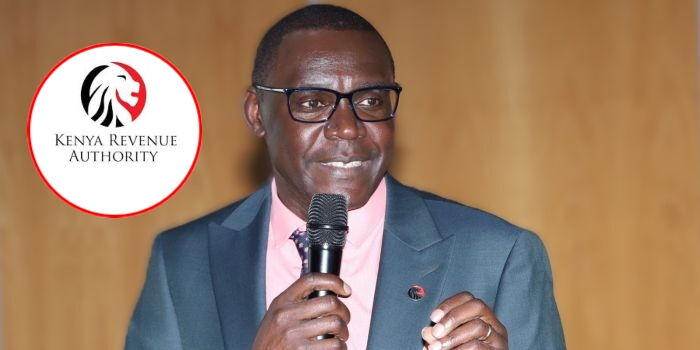
KRA Commissioner for Micro and Small Taxpayers George Obell said one of the biggest concerns is that many registered taxpayers either fail to submit returns or significantly understate their actual earnings.
This makes it difficult for the authority to collect the correct amount of tax and weakens the overall efficiency of the tax system.
He explained that the informal sector remains one of the most difficult areas to monitor. Many individuals and small traders continue to earn income outside easily traceable systems, making it hard for KRA to assess their real earnings under the current framework. As a result, a large amount of taxable income remains outside the authority’s reach.
The tax agency further noted that the compliance gaps are being felt across multiple tax heads, with personal income tax contributing the largest share of the deficit.
KRA estimates that it is currently collecting only about 2.5 per cent of the possible Ksh500 billion available from personal income tax, leaving a huge untapped opportunity.
Value Added Tax (VAT) collections are also still below target. The authority says only about 60 per cent of the estimated Ksh1.03 trillion potential VAT revenue is being realised, suggesting that a significant portion of transactions in the economy is either not being declared or is slipping through the tax net.
Rental income tax is another area where collections remain far below expectations. KRA says it is currently receiving less than one-fifth of the projected Ksh80 billion from this segment, indicating that many landlords are either not declaring rental earnings or are underreporting their income.
Corporate tax collections are equally affected, with the authority estimating an annual shortfall of about Ksh100 billion. This has largely been blamed on some businesses allegedly exaggerating their operational expenses in order to reduce declared profits and lower their tax obligations.
To address the growing revenue deficit, KRA says it is now considering major reforms aimed at improving compliance and making the tax process easier for taxpayers. One of the proposals under review is the introduction of a dual assessment system, where the commissioner can issue tax estimates alongside the current self-assessment model.
Under this approach, taxpayers would continue filing their own returns, but KRA would also provide commissioner-generated assessments to guide compliance and reduce cases of under-declaration.
“We are looking at a dual assessment regime in the future so that, in addition to self-assessment, we can help our taxpayers also by the commissioner making assessments so that it’s easy for taxpayers to comply,” Obell said.
The proposed reforms are expected to strengthen enforcement while also supporting taxpayers with clearer estimates, especially in sectors where income is difficult to track.
If implemented successfully, the new system could help KRA narrow the tax gap and improve the country’s overall revenue performance.
Join TUKO KADI Official WhatsApp Channel to stay updated on time
https://whatsapp.com/channel/0029VaWT5gSGufImU8R0DO30
