


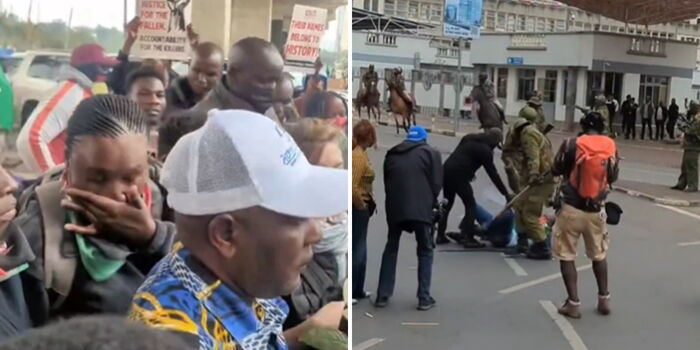
Government Explains How Protest Victims Can Apply for State Compensation
The Chairperson of the Protest Victims Compensation Panel, Makau Mutua, has explained the steps that people affected by protests must follow to receive compensation from the government.
His clarification comes after several victims complained that they had been left out of the compensation programme despite suffering injuries, property loss, or losing loved ones during demonstrations.
Speaking during an interview on Citizen TV on Sunday, June 28, Mutua emphasized that the government will not reach out to victims individually. Instead, anyone who believes they qualify for compensation must take the initiative to identify themselves and officially submit their claims to the relevant authorities.
According to Mutua, victims have several options when filing their applications. They can submit their claims through the Independent Policing Oversight Authority (IPOA), the Kenya National Commission on Human Rights (KNCHR), or directly to the Protest Victims Compensation Panel.
He encouraged anyone who believes they suffered harm during eligible protests to come forward without waiting to be contacted.
“Victims should lodge claims with the Kenya National Commission on Human Rights and the Independent Policing Oversight Authority, IPOA. I have publicly called on everyone who believes they qualify for compensation to come forward and submit their claims,” Mutua said.
Apart from filing claims through IPOA and KNCHR, victims can also visit the panel’s offices located at the Kenyatta International Convention Centre (KICC).
Those who are unable to visit in person can also contact the panel through its official phone numbers or email addresses to begin the application process.
Mutua stressed that the compensation programme depends on victims identifying themselves and providing the required information.
“Victims have to identify themselves and go to the designated offices. They can contact us through our telephone numbers, our email addresses, or visit our offices at KICC,” he explained.
The chairperson further noted that simply filing a claim is not enough. Every applicant must provide supporting evidence to prove that they were affected during a qualifying protest or demonstration.
For families seeking compensation after losing a loved one, the panel requires official documents such as a death certificate and a post-mortem report. These documents help verify the circumstances surrounding the death and confirm that it is linked to an eligible protest.
Individuals applying for compensation because of injuries must also provide sufficient evidence. This includes police reports, hospital treatment records, medical reports, receipts for medical expenses, and any additional documents that can support their claims. The panel will carefully review all submitted evidence before making a decision.
Mutua’s remarks come only days after the government released Ksh448 million to begin the first phase of the compensation programme.
During this initial phase, compensation was paid to 348 verified victims whose claims had already been processed and approved.
Despite the rollout of the programme, some victims have raised concerns, claiming they were unfairly excluded.
Others have alleged that there could be fraudulent activities within the compensation process, questioning how some beneficiaries were selected while genuine victims were left out.
Responding to these concerns, Mutua clarified that those who have already received compensation are individuals whose claims had been formally submitted, thoroughly assessed, and successfully verified by the panel.
He encouraged anyone who has not yet applied to submit their claims as soon as possible so they can also be considered.
He also acknowledged that there is always a possibility of fraudulent applications in such programmes. However, he assured the public that the panel has established a strict verification process to ensure that only genuine victims receive compensation and that public funds are protected from abuse.
The Protest Victims Compensation Panel is currently reviewing claims linked to protests and demonstrations that took place between 2013 and 2025. However, Mutua clarified that not every injury or incident automatically qualifies for compensation.
He explained that applicants must prove that their injuries, losses, or the death of a loved one occurred during protests or demonstrations protected under Article 37 of the Constitution of Kenya, which guarantees citizens the right to assemble, demonstrate, picket, and present petitions peacefully.
“Any claim submitted must be directly connected to a protest or riot that occurred while people were exercising the constitutional rights protected under Article 37, including the right to protest, demonstrate, and petition. If a claim is not linked to such an event, it will not qualify for compensation,” Mutua said.
The government has continued to encourage all eligible victims who have not yet applied to come forward, submit the required documents, and follow the official application process to ensure their cases are reviewed for possible compensation.
Join WANTAM Official WhatsApp Channel to stay updated on time
https://whatsapp.com/channel/0029VaWT5gSGufImU8R0DO30
